




We Speak Pool and Spa.
We Got You.
How Long Do Hot Tubs Last in an Ohio Climate? What Wears Out First
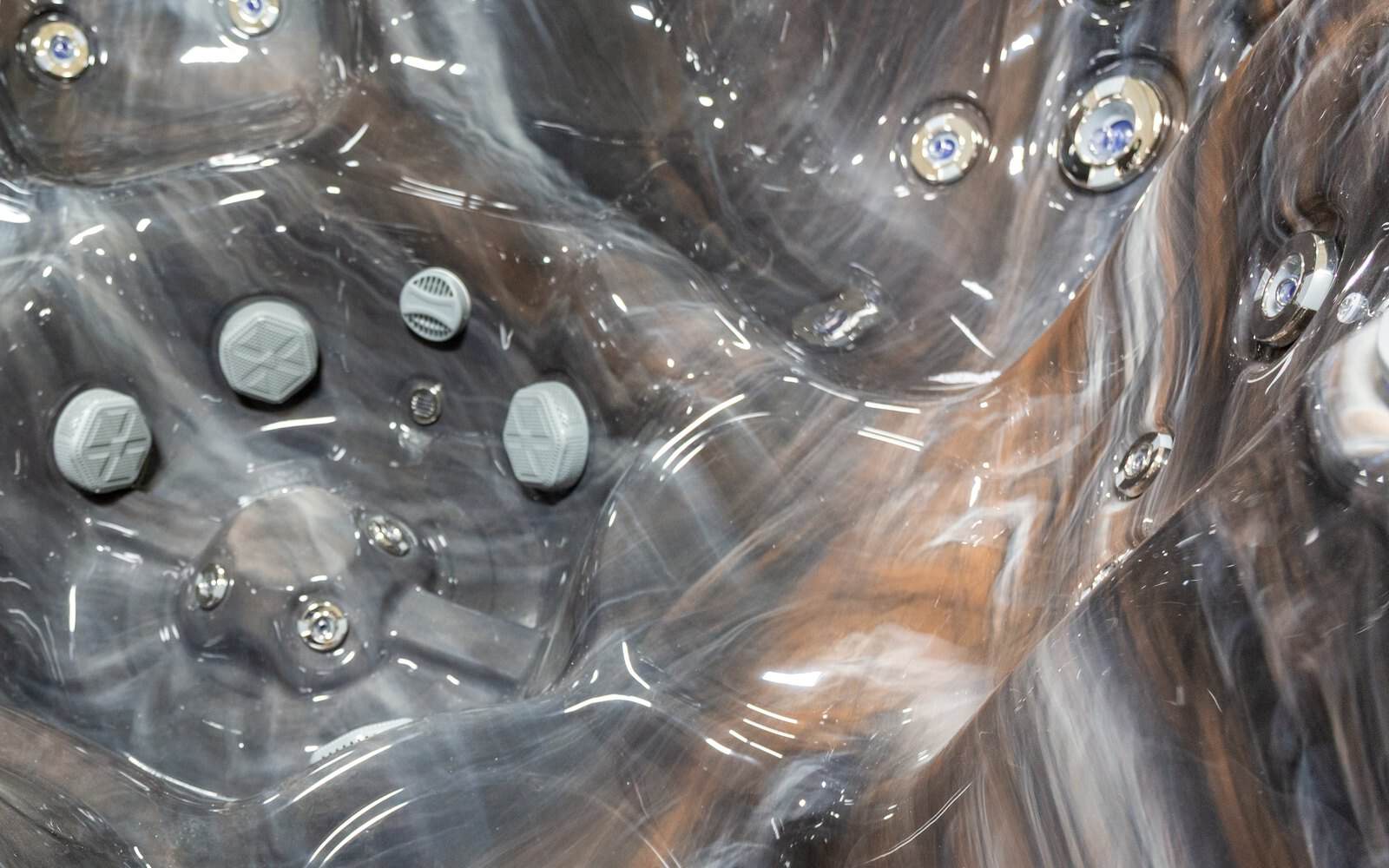
A hot tub does not wear out all at once. It wears out one part at a time, in an order that is close to the same on every spa, and the tub itself is usually the last thing to go. So when someone asks “how long do hot tubs last,” the honest answer depends on which part they mean and what the winters do to it.
Cincinnati Pool and Patio has been in the pool and spa business here since 1966, and hot tubs in Cincinnati live a harder life than the brochures assume. Freeze and thaw from December into March. Clay soil that moves under a pad. Hard water. An ice storm now and then that takes the power out for a day. This guide covers how long a spa lasts here, what wears out first and which problems are worth fixing.
The short version
- With proper care, a quality hot tub can last 10 to 20 years or more. The shell and frame set the outer limit. Almost everything else can be replaced along the way.
- Parts wear in a predictable order: filter cartridges first, then the cover, then headrests and jet inserts, then pump seals and the heater, then the electronics. The shell is last.
- Water chemistry ends more pumps and heaters than age does. Low pH eats metal and seals, and hard water bakes scale onto the heater.
- In an Ohio winter the safest hot tub is one that is full, hot and running. Freeze damage happens when water sits still in the plumbing, usually after a power outage or a tripped breaker nobody noticed.
- Repair a spa that has a sound shell, a dry cabinet and one failed part. Replace it when the shell is cracked, the insulation is waterlogged or the frame has rotted.
How long do hot tubs last?
With proper care, a quality hot tub can last 10 to 20 years or more. That range is for the tub itself: the shell, the frame and the insulation. Covers, filters, pumps and heaters wear out sooner and get replaced along the way, the same as tires and brakes on a car that is still sound.
Where a particular spa lands in that range comes down to how it was built, how the water was kept, and what the weather and the ground did to it while it sat in the yard. None of that is luck.
That is also why we will not hand you a neat chart of years for every part. The same pump can run a long time behind clean, balanced water and fail early behind water that was ignored. A number that is right for a spa in Arizona is wrong for one that sits through a Cincinnati February. What holds steady from spa to spa is the order things wear in. That part we can tell you.
What wears out first on a hot tub?
Filter cartridges wear out first because they are meant to. The cover is usually the first real replacement, followed by headrests and jet inserts, then pump seals and the heater element, then the control electronics. The cabinet and frame come late. An acrylic shell that has been cared for normally outlasts all of it.
Think of a spa as three layers that age at different speeds.
| Part | When it wears | What shortens its life |
|---|---|---|
| Filter cartridge | First. A routine replacement | Skipped rinses, body oils and lotions, scale |
| Cover | The first large replacement | Sun, snow load, chemical vapor, a foam core that takes on water |
| Headrests and jet inserts | Early to middle | High sanitizer levels, grit, scale in the bearings |
| Pump seals and heater element | Middle | Low pH, scale, low flow from a dirty filter |
| Control board and topside panel | Middle to late | Moisture in the cabinet, power surges |
| Cabinet and frame | Late | Wet ground, splash-out, rot in a wood frame |
| Shell | Last | A pad that settles, freeze damage, sitting empty in the sun |
The first layer is the stuff you are supposed to use up. Hot tub filters get rinsed, deep cleaned and replaced when the pleats flatten or fray. A cover does the hardest job on the spa. It holds heat in against the cold while steam and sanitizer work on it from below. When a cover gets heavy, it has taken on water and stopped insulating. Our guide on when to replace a hot tub cover walks through the signs.
The second layer is the moving and heating parts. Hot tub jets have an insert that spins or swivels on a small bearing, and grit or scale will lock it in place. On most spas the insert twists out and a new one goes in, so a dead jet is a small fix. Pumps usually announce themselves with a drip at the seal or a new noise. Heaters quit quietly. The first sign is water that will not come up to temperature.
The third layer is the tub itself: shell, frame, insulation and cabinet. When those are sound, nearly everything bolted to them can be replaced. When they are not, you are no longer fixing a hot tub. You are deciding whether to keep one.
Why do hot tub pumps and heaters fail early?
Most early pump and heater failures trace back to the water, not to age. Low pH and low alkalinity make water corrosive, which attacks heater elements and pump seals. Hard water with a high pH does the opposite and bakes scale onto the heater. A clogged filter then cuts the flow both parts depend on.
A hot tub is a small amount of water doing a lot of work. A few hundred gallons, kept hot, pushed through a heater and a pump over and over. Whatever is wrong with that water gets delivered to every metal part and every seal, many times a day.
Water around here tends to run hard, and well water in the outlying counties often more so. Hard water is not a problem by itself. Left unbalanced in a hot spa, the calcium comes out of the water and lands on the hottest surface it can find, which is the heater. Scale insulates the element, the element runs hotter to do the same job, and its life gets shorter.
The fix is routine. Test the water every week, keep pH and alkalinity in range, and use a stain and scale preventer if your fill water is hard. Bring a cup of spa water to the store any day we are open and we will test it free and tell you plainly what it needs. Our hot tub water chemistry guide covers the numbers, and the spa chemicals are on the shelf year-round.
The filter is the other half. A pump is built to move water, and a cartridge packed with oils and scale makes it strain against a restriction. Low flow is also behind a lot of heater error codes. A clean filter protects the two hardest-working parts on the spa.
What does a Cincinnati winter do to a hot tub?
A Cincinnati winter is hard on a hot tub in three ways. Water left sitting in the plumbing can freeze and split pipes and fittings. Snow and ice load the cover. And clay soil that freezes, thaws and shifts can move the pad, which leaves the shell and frame carrying weight unevenly.
Start with the part people get backwards. Cold does not hurt a running hot tub. A spa that is full, heated and circulating protects itself, and a well-insulated one with a good cover holds its heat through winters here. Many owners say their favorite soaks are on cold, snowy nights. Our breakdown of what a hot tub costs to run in an Ohio winter covers the heating side.
The danger is water that stops moving. The tub holds a big mass of hot water in an insulated box, and it cools slowly. The plumbing does not have that protection. A few cups of water sitting in a pump housing or a jet line down in the cabinet will freeze long before the tub does, and ice expands with enough force to split a fitting. That is why a spa drained halfway and left for the winter is in more danger than one left running. A proper winter shutdown means getting every line empty, not just the tub.
Our weather adds a second problem. We do not get one long freeze. We get freeze, thaw, rain and freeze again, sometimes inside a week. Snow melts on the cover, runs into the seams and refreezes. Brush snow off with a broom while it is light, and never chip ice off a cover with a shovel.
The third problem is under the spa. Much of the ground in Greater Cincinnati and Northern Kentucky is clay. Clay swells when it is wet, shrinks when it dries and heaves when it freezes. A pad that was level on delivery day can be out of level a few winters later. A filled spa is heavy, and it is designed to carry that weight on a flat, fully supported base. Let one corner lose support and the shell and frame start to flex.
There is an easy check each spring. Look at the waterline. If the water sits closer to the rim on one side than the other, the pad has moved, and it is time to have it looked at before the shell pays for it.
What should you do if the power goes out in freezing weather?
Keep the cover closed and latched, and do not open it to check the water. A full, covered spa holds its heat for a long time. Lay blankets or a tarp over the cover and cabinet to block the wind. When power returns, confirm the spa restarted and the breaker did not trip.
Ice and winter wind take down power lines somewhere in the region most winters, and a hot tub rides out a short outage better than people expect. All that hot water is stored heat. Your job is to keep it in the box. Every time the cover comes up, heat leaves that you cannot put back.
If the outage looks like it will run long in a hard freeze, open your owner’s manual to the freeze protection section before you do anything else, and follow it. If draining is called for, it has to be complete, lines included. Half a drain is the worst outcome. Call us at 513-554-0000 with your brand and model if you are not sure what yours needs.
The outage that ruins a spa is usually not the dramatic one. It is the breaker that tripped during a storm while the family was away, or the GFCI that popped when the power came back and nobody walked out to look. Most spas have a freeze protection mode that runs the pumps when the temperature drops, and it only works with power. After any storm or outage, go look at the topside panel. If you travel in January, ask a neighbor to check that the spa is lit and warm. That one habit saves more hot tubs than any product we sell.
Does the way a hot tub is built change how long it lasts?
Yes. The shell material, the frame and the insulation decide how well a spa holds up once the easy parts have been replaced a time or two. A frame that cannot rot, a shell that resists fading and cracking, and insulation that stays dry are what separate a long-lived spa from a short-lived one.
This is the part of a hot tub you cannot see from the seat, and it is the part that sets the outer limit. So ask what is behind the cabinet before you ask how many jets it has.
The frame matters most in a wet climate. A traditional wood frame sits inches off the ground behind a cabinet that gets rained on, splashed and snowed against, and wood that stays damp eventually rots. The Wellis spas on our floor are built on a composite frame that will not rot, warp or weaken, with acrylic shells and full-foam insulation. AquaZen is built on a frame that will not rot, warp or weaken as well. Dream Maker hot tubs take a different road: rotationally molded shells in a lightweight, durable construction that needs little upkeep.
Insulation is the quiet one. It keeps heat in, which you notice on the electric bill. It also keeps the plumbing warm, which you only notice the night the power goes out. Foam that has soaked up water from a slow leak does neither. That is one more reason to deal with a drip in the cabinet the week you find it.
We compare all three lines in our guide to the hot tub brands on our floor. For the years of coverage on a specific model, ask us for that brand’s written warranty. We would rather hand you the document than quote it from memory.
Is it better to repair or replace an old hot tub?
Repair a hot tub when the shell is sound, the cabinet is dry inside and one part has failed. Replace it when the shell is cracked or blistered, the insulation is waterlogged, the frame has rotted, parts for it are no longer made, or several systems are failing in the same season.
Age alone is a poor guide. We would take an older spa that ran every winter on balanced water over a newer one that sat empty and uncovered through two of them. What you are judging is the structure. Pumps, heaters, jets, covers and control boards are all parts, and parts can be swapped as long as someone still makes them.
So look at the tub the way you would look at an old house. Is the foundation good? Open the equipment door and look for water stains, white crust from a slow leak, soggy foam and chewed insulation. Mice like a warm, dry cabinet in the fall. Check the shell for blisters and for cracks that catch a fingernail. Check that the spa still sits level.
The same list is how to size up a used hot tub, with one more question. Was it running, or was it sitting? A spa you can see full, hot and working tells you most of what you need to know. One that has sat empty for a couple of winters is a guess, because freeze damage in the plumbing does not show until it is filled.
Be honest about the tipping point too. One failed part on a sound spa is maintenance. A new problem every few months means the equipment is aging out together, and each repair buys less time than the one before. When you reach that point, come sit in a few spas on the hot tub showroom floor before you decide.
Which habits add the most years to a hot tub?
Six habits do most of the work: test and balance the water weekly, rinse the filter on a schedule, drain and refill on time, treat the cover with a conditioner, keep the spa running through winter, and look inside the equipment door every season for drips, stains or nests.
None of this is complicated and none of it needs a service call. We do not run a weekly spa cleaning route, so the routine is yours, and it takes a few minutes a week. Our hot tub maintenance guide lays out the weekly, monthly and seasonal schedule, so we will not repeat it here.
Two things get skipped more than the rest. The first is purging the plumbing before a drain. A jet and plumbing cleaner clears the buildup inside lines you cannot see or reach. The second is the cover. A spa cover cleaner and protectant a few times a year keeps the vinyl from drying out and cracking in the sun, and a cover that stays sealed keeps its foam dry.
If you are shopping now, our hot tub buying guide covers what to ask about construction and warranty before you sign.
See what is behind the cabinet before you buy
The best way to judge how long a hot tub will last is to look at how it is built and then sit in it. The showroom at 10731 Reading Road in Evendale is open Monday through Saturday, with filled, heated spas you can wet test. Ask us what the frame is made of, what the insulation is and what the written warranty covers. We deliver across Greater Cincinnati and Northern Kentucky. Contact us or call 513-554-0000, and bring a cup of water from the spa you have now to our pool and spa supply store. We will test it while you look around.
Frequently asked questions
Replace a hot tub when the structure fails, not when a part does. A cracked or blistered shell, waterlogged insulation, a rotted frame or parts that are no longer made are reasons to replace. A dead pump, heater, jet or cover on an otherwise sound spa is a repair.
There is no honest single number, because water chemistry and filter care change the answer more than age does. A pump behind clean, balanced water and a clean filter can run for many years. The early signs of wear are a drip at the seal, a louder hum or weaker jets.
Yes. With proper care a quality hot tub can last 10 to 20 years or more. Spas that reach the high end were built on a sound shell and frame, kept on balanced water, kept running through winter and had their covers, pumps and heaters replaced as those wore out.
It can be. A spa that is drained but still has water in the pump, heater and lines can freeze and crack in the plumbing, and an empty acrylic shell should not sit uncovered in the sun. If you shut one down, follow the owner’s manual and get every line empty.
It depends on its condition, not its birthday. A spa that is full, hot, level and dry inside the cabinet still has value. One that has sat empty through winters is a risk, because freeze damage in the plumbing does not show until it is filled. See it running before you agree to anything.