




We Speak Pool and Spa.
We Got You.
Hot Tub Maintenance: A Cincinnati Owner’s Guide to Weekly, Monthly and Seasonal Care
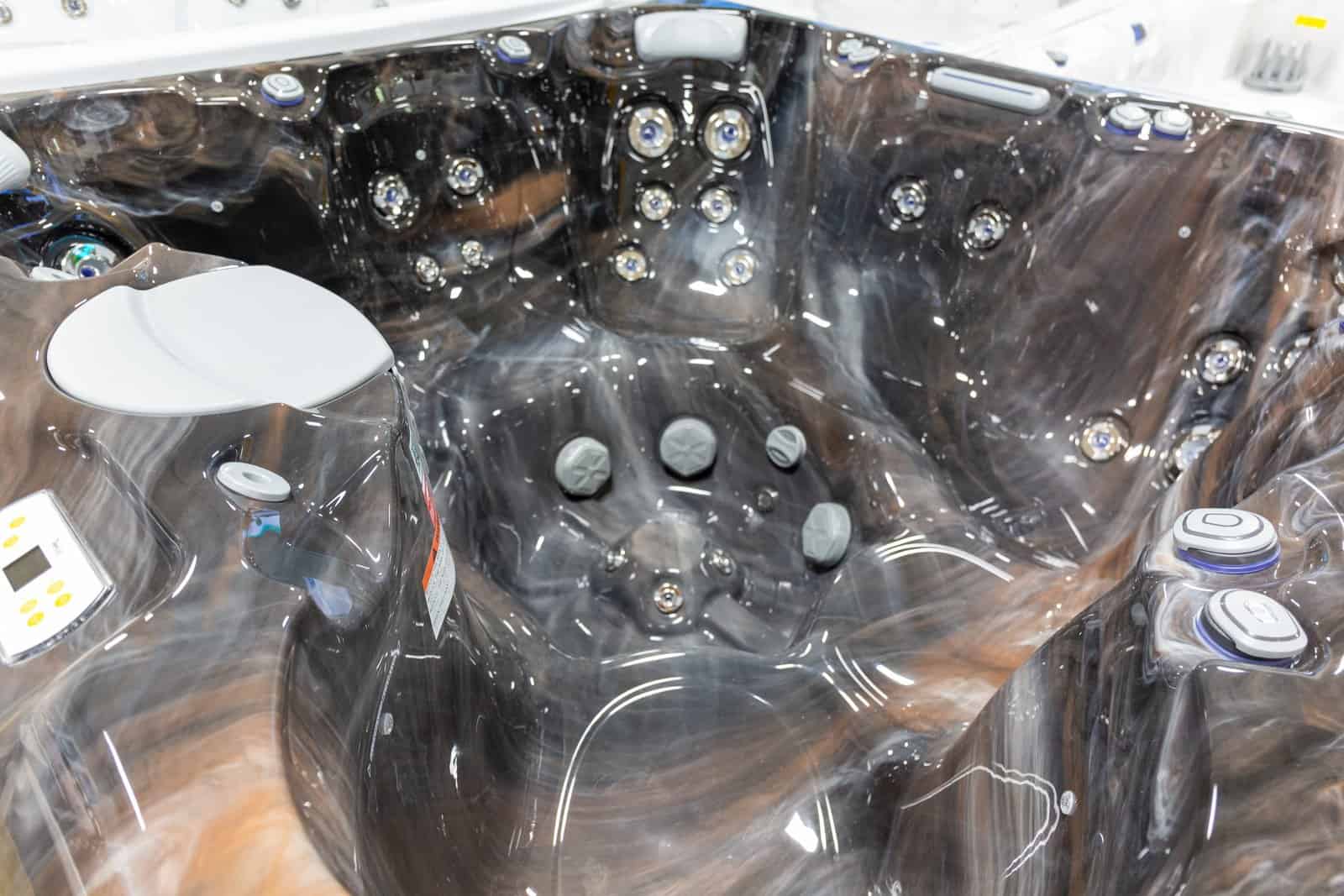
A hot tub asks for about fifteen minutes a week. Skip those minutes for a month and it asks for a Saturday, a drain, a new filter and a conversation at our counter that starts with the words “it was fine last week.” We have been selling and servicing spas on Reading Road since 1966, and almost every hot tub problem that walks in the door traces back to one of four things: water that was not tested, a filter that was not rinsed, a cover that was not cared for, or water that was kept months past its life.
This is the routine we give new owners when a Wellis or Dream Maker spa leaves our floor, written for the way spas actually get used in Greater Cincinnati and Northern Kentucky: hard municipal water in the city, well water in the outer counties, four real seasons, and a winter that is the whole reason most people here bought the thing. The chemistry has its own beginner’s guide to hot tub water chemistry. This post is the maintenance around it: what to do, how often, and what we see go wrong.
The short version
- Hot tub maintenance is a schedule, not a project: test and adjust the water two or three times a week, rinse the filter every two weeks, deep clean it monthly, condition the cover every three months, and drain and refill every three to four months.
- The filter is half of water quality. A cartridge that never gets rinsed is the most common reason a spa goes cloudy, throws a flow code, or eats sanitizer.
- Spa water has a shelf life. After about four months of use it is full of dissolved solids that no chemical removes, and the only fix is fresh water.
- Never use household cleaners, bleach, dish soap or anything abrasive on an acrylic shell, a filter or a cover. Spa-specific products exist because the water is 100 degrees and holds 400 gallons, not 40.
- In a Cincinnati winter the spa stays full, powered and covered. Draining it for the season is only safe when the plumbing is blown out properly, and a frozen heater is the most expensive mistake a spa owner can make.
What does hot tub maintenance actually involve?
Four jobs on a repeating clock: keeping the water balanced and sanitized, keeping the filter clean so the water can move, keeping the shell, jets and cover clean so nothing builds up, and replacing the water itself every three to four months. Each one takes minutes when it is done on time and hours when it is not.
People picture hot tub maintenance as chemistry, and the chemistry matters, but the spas that stay trouble-free for ten years belong to owners who treat it as a calendar. The water gets dipped with a test strip on the way out to a soak. The filter comes out on a Sunday every other week. The cover gets wiped when the furniture gets wiped. None of it is hard and all of it is easy to let slide, which is why the rest of this post follows the same clock.
| How often | What to do | Why it matters |
|---|---|---|
| Before every soak | Dip a test strip for sanitizer and pH. Rinse off lotion and sunscreen before getting in. | Warm water with no sanitizer grows bacteria in hours. Body products are what foams the water and loads the filter. |
| Two or three times a week | Test sanitizer, pH and alkalinity. Adjust with small doses, jets on, cover off for twenty minutes. | Jets drive pH up all week on their own. Small corrections beat one big one. |
| Weekly | Shock the water (non-chlorine oxidizer or dichlor), wipe the waterline, check the water level. | Shock burns off the oils and sweat that sanitizer cannot keep up with. A low water level starves the pump. |
| Every two weeks | Pull the filter cartridge and hose it out, top down, pleat by pleat. | A loaded filter slows flow, trips the heater and lets the water cloud. |
| Monthly | Soak the cartridge overnight in filter cleaner. Wipe the cover with a mild cleaner. Test the GFCI. Look under the cabinet panel for drips. | Hosing removes debris; only a soak removes oils and scale. Small leaks are cheap; ignored leaks are not. |
| Every three months | Condition the cover’s vinyl. Treat the plumbing with a line flush before the next drain. | Dry vinyl cracks and a waterlogged cover stops insulating. Biofilm in the lines reseeds fresh water within days. |
| Every three to four months | Drain, clean the shell, clean or replace the filter, refill and rebalance from scratch. | Water accumulates dissolved solids no chemical removes. Fresh water is the reset. |
| Yearly | Replace the filter cartridge. Inspect the cover for sag and weight. Have anything that drips, hums or throws codes looked at. | Pleats wear out even when they look clean. A cover that has gained weight is done. |
How often should you test and balance hot tub water?
Test sanitizer and pH before every soak and run a full test of alkalinity, pH, calcium hardness and sanitizer two or three times a week. Adjust in small doses with the jets running. A spa holds a tenth of what a pool holds at twice the temperature, so readings move in days, not weeks.
The targets are the same four numbers our water chemistry guide walks through: total alkalinity 80 to 120 ppm, pH 7.2 to 7.8 and ideally 7.4 to 7.6, calcium hardness 150 to 250 ppm, and sanitizer at bromine 3 to 5 ppm or free chlorine 1 to 3 ppm. Fix them in that order, alkalinity first, because alkalinity steadies pH and pH decides whether the sanitizer works at all. A good set of pool and spa test strips covers the twice-a-week check. Bring a sample to the Reading Road counter once a month or whenever a reading will not behave and we will test it, which also catches what strips miss, like metals and stabilizer.
Two local notes. City water from Cincinnati, Blue Ash, Mason or the Northern Kentucky utilities fills a spa at roughly 125 to 140 ppm calcium hardness, below the spa range, so a fresh fill here usually needs calcium added, and a spa that foams on new water is almost always a low-calcium spa. Out in Clermont, Brown, rural Warren and Butler, and much of Boone, Kenton and Campbell, spas fill from wells that run hard and often carry iron or manganese that stains an acrylic shell within a week. A hose-end prefilter and a metal sequestrant at fill time are the fix.
How often should you clean a hot tub filter?
Hose it out every two weeks, soak it overnight in a spa filter cleaner once a month, and replace the cartridge about once a year or sooner if the pleats fray or the end cap cracks. Keep a second cartridge so the spa is never running without one while the first one soaks.
The filter is the part of hot tub maintenance people skip, and the one that causes the most calls. A spa cartridge is a pleated polyester cylinder, and everything the sanitizer kills, plus every bit of lotion, sweat and suit detergent, ends up pressed into those pleats. Load it up and flow drops, the heater’s flow switch trips, and the topside panel flashes a code that has nothing to do with the heater and everything to do with the cartridge.
The two-week rinse is a garden hose with a spray nozzle, working top to bottom between the pleats until the water runs clear. The monthly soak is a bucket, water and a cartridge filter cleaner overnight, then a thorough rinse so none of the cleaner goes back into the spa and foams. The cleaner removes the oil and scale a hose cannot, which is why a filter that looks clean after rinsing can still be choking the pump. Do not pressure wash a cartridge, run it through the dishwasher, or use dish soap or bleach on it. When the pleats fan out or the fabric looks fuzzy, it is done. We stock replacement spa filter cartridges for the brands we sell; the part number is printed on the end cap of the one you have.
How often should you drain and refill a hot tub?
Every three to four months for a typical family spa, sooner with heavy use. The manufacturer rule of thumb is gallons divided by three, divided by daily bathers, equals days between drains. A 400 gallon spa used by two people most nights lands at about two months; a couple soaking on weekends gets closer to four.
Spa water wears out. Every chemical dose leaves dissolved solids behind, every soak adds oils and sweat, and after three or four months the water is saturated and nothing balances anymore. The tell is water that reads fine on the strip and still looks dull, foams at the slightest provocation, and needs more sanitizer every week to hold the same number. A clarifier buys a week. A drain fixes it.
The drain is the one time you can clean the parts you cannot reach. The day before, dose the spa with a plumbing line flush and run the jets for twenty minutes with the cover off; that strips the biofilm inside the plumbing that would otherwise reseed fresh water within days. Drain with the spa’s drain valve or a submersible pump, wipe the shell with a spa cleaner and a soft cloth, clean or swap the filter, and refill with the hose in the filter well so the pump does not airlock. Let the water reach at least 90 degrees before you test, then balance alkalinity, pH and calcium in that order. Around here, pick a mild stretch. A January drain with water left in the lines is how heaters crack, and cold hose water takes a full day to come up to temperature.
How do you clean the shell, the jets and the waterline?
Wipe the waterline weekly with a soft cloth and a spa surface cleaner, never a household product. Clean the whole shell at every drain. Clear the jets by backing out any that turn, soaking them in the line flush solution, and rinsing. A tennis ball floated in the water pulls body oils off the surface between cleanings.
Acrylic is tough but it is not stainless steel. Abrasive pads, powdered cleansers and anything with ammonia or bleach will haze the finish or leave a residue that foams for days. The scum line at the water’s edge is oil and lotion, and the easiest way to keep it small is an enzyme product that digests the oils before they stick, plus the cheapest trick in the business: a clean tennis ball in the water. The felt attracts oils, and you toss it when it goes gray. Weekly, a damp microfiber cloth on the waterline takes a minute. At every drain the shell gets a proper clean and the jets get attention: most twist out a quarter turn, soak in a bucket of the line flush, get the threads scrubbed with an old toothbrush, and go back in. A jet that spins freely without turning on or off has a worn internal fitting, and that is a cheap part.
What you wear in matters as much as what you clean with. Detergent left in a swimsuit is the number one source of foam we hear about; rinse suits in plain water instead of washing them with fabric softener. A shower before a soak keeps lotion and sunscreen out of the water, which keeps them out of the filter.
How do you take care of a hot tub cover?
Wipe it monthly with a mild cleaner, treat the vinyl with a spa cover conditioner every three months, keep snow brushed off it, and never use a petroleum-based protectant. When a cover gets noticeably heavier it has absorbed water into the foam, stopped insulating, and needs to be replaced rather than repaired.
The cover is the most neglected piece of equipment on a spa and the most expensive one to ignore, because a cover that has gone heavy leaks heat all night and the electric bill shows it long before the cover looks bad. Our post on hot tub running costs in an Ohio winter goes into that; the short of it is that the cover is the insulation. The foam cores are sealed in a vapor barrier, and the two things that break it are sun on dry vinyl, which cracks it, and weight, which includes snow, wet leaves and the dog. Keep it clean, keep it conditioned with a spa cover conditioner made for the job, and keep the heavy stuff off it. Flip it open on a dry day a few times a year so the underside can air out; if you smell mildew, wipe the underside with diluted vinegar and let it dry in the sun.
A cover lifter is not a luxury here. Dragging a heavy cover off by hand twice a day through a Cincinnati winter is how corners tear and foam cores snap at the hinge. If your spa sits under a roof or a privacy screen, our guide to hot tub enclosures for a Cincinnati winter covers the clearances a lifter needs.
What should you check on the equipment side?
Once a month, pull the cabinet access panel and look for drips at the pump unions, heater fittings and manifold. Press the GFCI test button and confirm it trips. Listen to the pump on high speed for grinding. Anything that drips, hums or throws a code that a filter clean does not cure gets looked at before winter.
Most spa equipment runs for years without attention, which is exactly why the monthly look matters: a drip at a pump union is a five-minute fix and a drip that ran all winter is a rotted cabinet floor. Panel off, flashlight in, wet spots or white mineral tracks mean a seep. The GFCI, whether it is at the disconnect box or on the cord of a plug-in Dream Maker spa, is the only thing between a fault and the people in the water. If it will not trip, or trips and will not reset, stop using the spa until an electrician looks at it.
Error codes on the topside panel are mostly the spa protecting itself. A flow, dry or heater code after a heavy-use weekend is nearly always a loaded filter or a low water level, in that order: clean the cartridge, top the water up to the middle of the skimmer opening, power cycle, and it clears. A code that comes back with a clean filter and the water right is a sensor or a heater, and that is worth a phone call rather than a parts order. We have sold and serviced hot tubs in Cincinnati for sixty years and will tell you honestly whether what you are describing is a part, a service call, or nothing.
Does a Cincinnati winter change the routine?
The water and filter routine stays the same; what changes is that the spa must stay full, powered and covered. Modern spas have freeze protection that circulates water on cold nights, so the danger is a power outage, not the weather. Brush snow off the cover, keep the water level up, and never drain without a proper blowout.
Winter is when a hot tub earns its keep here, and it is also when we see the most expensive repair there is: a heater or manifold cracked by ice because somebody shut the spa down and did not get the water out of the lines. A running spa does not freeze. The control system runs the pump on the coldest nights whether or not the heater is called for, and the cover and cabinet insulation hold the heat. The spa only becomes a freeze risk when the power is out. If an ice storm takes the lines down, keep the cover closed and the panel shut; a full, covered spa holds usable heat for a day or more in the teens and will not freeze solid for days. If the outage will run longer than that, or you are leaving town with a storm coming, call us and we will tell you how to drain and protect it, because the garden-hose version of that job is what cracks heaters.
Two winter habits worth keeping. Test strips read wrong in the cold, so read the strip right at the water where the steam keeps it warm, or indoors. And keep the water level up: winter air is drier, evaporation runs heavier, and a spa that runs low in February with the jets on sucks air, loses prime and throws a flow code at the worst possible moment. Our seasonal care tips for outdoor spas covers the spring and fall transitions.
What are the most common hot tub maintenance mistakes we see?
Keeping the same water past four months because it still looks clear, running the spa with the filter out or never soaked, using dichlor for months until stabilizer locks up the chlorine, dosing chemicals with the cover closed, cleaning the shell with household products, and ignoring a cover that has gained weight. Every one of them ends in a drain.
Sixty years at the same counter turns up the same stories. The water that was fine right up until it was not is almost always water past its life. The spa that reads perfect but foams and smells is almost always a filter that has only ever been hosed, never soaked. The chlorine that “stopped working” is usually a spa dosed with dichlor week after week until the stabilizer that rides along with it climbed so high the chlorine could not do its job, and the only fix was fresh water. Shocking with the cover closed traps the gases under it, which corrodes the underside and pits the metal fittings. And the cover that “just got old” usually sat under snow or dried out in August sun with no conditioner for three summers.
The one we would most like to retire is the household cleaner. Dish soap in the shell, bleach in the filter, a pine cleaner on the cover. Each is designed for a surface you rinse and dry, not for 400 gallons of hot water cycling through a pump. Everything we stock in spa chemicals and cleaners is there because the pool version of the same product is the wrong strength for a spa and the kitchen version is the wrong chemistry entirely.
Do you need a hot tub maintenance service in Cincinnati?
For most owners, no. Routine hot tub maintenance is a fifteen-minute homeowner job and that is how we teach it. We do not run a weekly spa cleaning route. We test your water at the counter, stock the chemicals and filters the routine needs, and handle what is not routine, like a code that will not clear.
Plenty of companies will sell you a monthly spa service, and for a rental property or a spa used twice a year it can make sense. For a family that soaks every week, it mostly means paying someone to dip a strip you could dip yourself on the way out the door. Our approach has always been to make the owner competent instead. When a spa leaves our floor we go over the routine on the paperwork, and the counter is open Monday through Saturday for the questions that come up in month three. Bring a water sample. Bring the filter if it is doing something odd. Owners from West Chester to Anderson Township have been doing exactly that for decades, and most of them have never needed anyone to maintain the spa for them.
Where to start if your spa is behind
If the water is cloudy, the filter has never been soaked and you cannot remember the last drain, do not chase it with chemicals. Line flush, drain, clean the shell, new cartridge, refill, balance from scratch, then start the schedule in the table above from day one. That is a Saturday. After that it is fifteen minutes a week.
If you are reading this because you are deciding whether a hot tub is worth the upkeep, the honest answer is that the upkeep is lighter than a pool’s and the payoff runs twelve months a year. Our hot tub buying guide for Cincinnati walks through the decision, our post on what the science says about hot tub health benefits covers the why, and the showroom at 10731 Reading Road in Evendale has Wellis and Dream Maker spas filled, heated and ready to wet test six days a week. Sit in one, ask how it is maintained, and we will show you the filter, the cover and the routine. Call or stop by with your questions.
Hot tub maintenance questions we hear at the counter
Every three to four months for a typical family spa, sooner with heavy use. The rule of thumb is gallons divided by three, divided by the number of daily bathers, equals days between drains. When water reads fine on a test strip but still looks dull, foams easily and needs more sanitizer every week to hold the same number, it is past its life and no chemical will bring it back.
The felt on a tennis ball attracts body oils, lotion and sunscreen that float on the surface, so the ball pulls them out of the water before they build up on the waterline or load the filter. Float a clean one, toss it when it goes gray, and replace it. It is a supplement to a weekly waterline wipe and an enzyme product, not a replacement for either.
Yes. A spa is designed to stay full, heated and covered year round, and in a Cincinnati winter it must, because the control system’s freeze protection only works while the spa has power. Turning it off between uses costs more in reheating than it saves and lets the water sit unsanitized. The exception is a planned shutdown with a proper plumbing blowout.
Warm water with no sanitizer grows bacteria within hours, so the first thing you get is cloudy, odorous water and a real rash risk. Next comes a loaded filter that drops flow, trips the heater and throws codes. Scale forms on the heater element, the shell stains, biofilm coats the plumbing, and a neglected cover goes heavy and stops insulating. Recovery almost always means a drain, a line flush, a new filter and a fresh start.
Lighter than a pool’s. The routine is a test strip before each soak, a fuller test and small adjustments two or three times a week, a filter rinse every two weeks and a soak once a month, a cover wipe monthly, and a drain and refill every three to four months. Fifteen minutes a week most weeks and a Saturday morning a few times a year. The hard part is consistency, not skill.