




We Speak Pool and Spa.
We Got You.
How to Move a Hot Tub (and What Happens on Delivery Day)
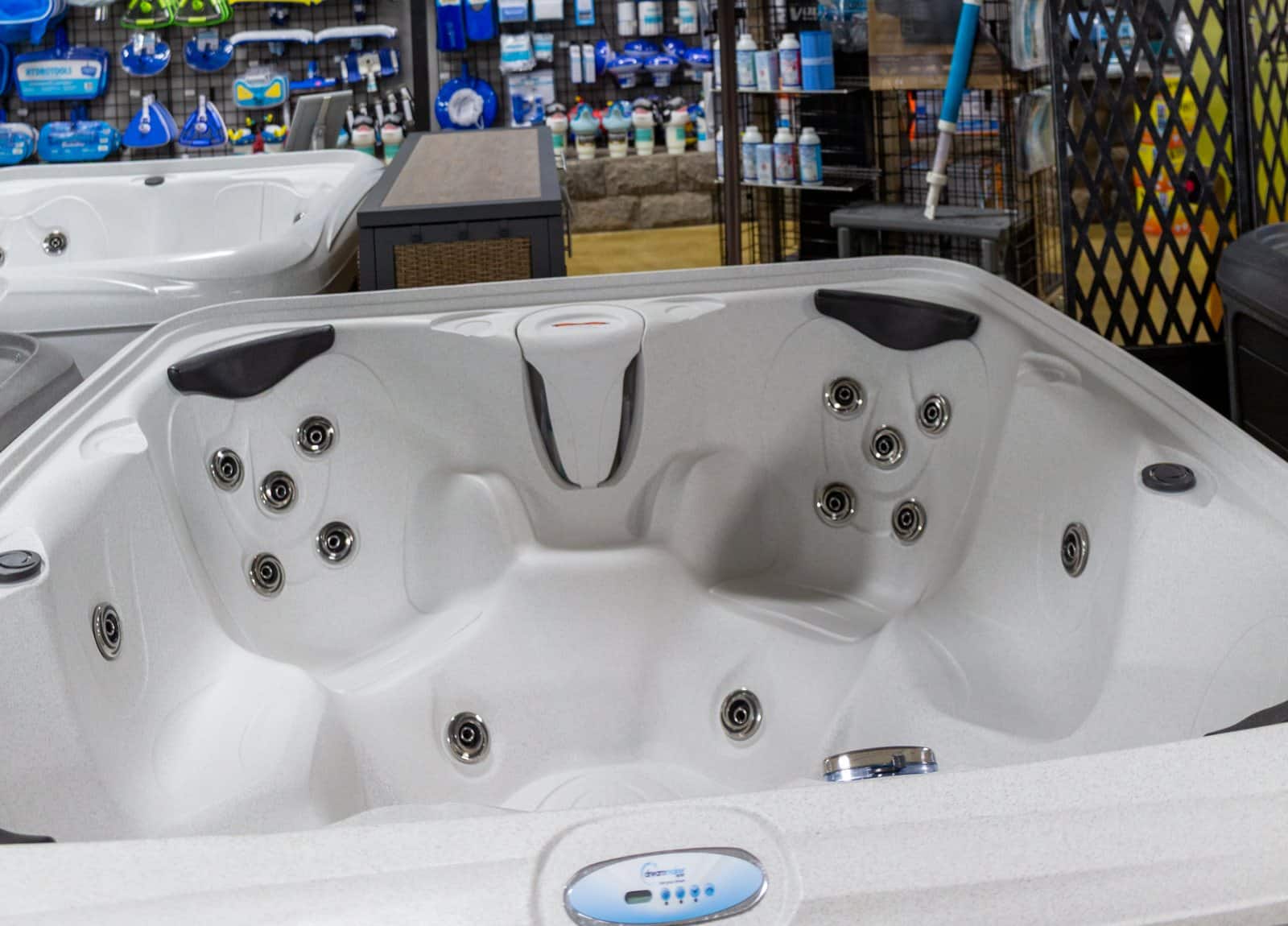
Every hot tub on our floor leaves the building the same way. Drained, dry, tipped up on its side on a cart and rolled out a door by people who have done it before. What makes a hot tub move go wrong is almost never the lifting. It is the forty feet between the driveway and the pad that nobody walked with a tape measure.
Cincinnati Pool and Patio has been in the pool and spa business here since 1966, and we deliver hot tubs in Cincinnati and across Greater Cincinnati and Northern Kentucky. This guide covers both moves people ask us about: delivery day for a new spa, and moving a hot tub you already own. We deliver the spa. We do not wire it, fill it or start it up. Those parts belong to your electrician and to you, and we go over them with you before the spa arrives.
The short version
- A hot tub moves empty, dry and on its side. The number that decides whether it fits your path is the spa’s height, which becomes its thickness on the cart, plus room for the cart and the hands on it.
- Walk and measure the whole route before you choose a model, not after. Gates, steps, air conditioner units, low eaves and the turn at the corner of the house stop more deliveries than weight does.
- Winter is a good time to move a spa in Cincinnati while the clay is frozen firm, and a bad time during a thaw, when a loaded cart ruts a soft lawn. Sheets of plywood fix most of that.
- Before delivery day you need a level, stable pad or a reinforced deck, the right power in place and a clear route. We go over the site and electrical requirements with you before the spa arrives. We deliver it. Your electrician wires it and you fill it.
- To move a spa you already own: power off at the breaker, a licensed electrician disconnects a hardwired tub, every drop comes out including the plumbing lines, and a professional mover takes over if the route includes stairs, a steep slope or a fence that cannot open.
What happens on hot tub delivery day?
On delivery day the spa arrives empty and travels from the truck to your site on its side on a cart. Before that day we schedule the delivery with you and go over the site and electrical requirements. Wiring, filling and startup are done by your electrician and by you, not by the store.
The delivery itself is usually the shortest part of buying a hot tub. The real work happens in two conversations before it. In the showroom, when you pick a model, we ask about your yard: where the spa is going and how it gets there. Then comes the site and electrical review, where we tell you what the pad and the power need.
Compare that with a spa ordered online. Those are typically freighted to your driveway, and the last stretch to the backyard is your problem. That last stretch is the entire job, and it is why we ask so many questions about a yard we have not seen yet.
How do you plan the path from the driveway to the pad?
Measure the narrowest point of the whole route, then compare it with the height of the spa, because a hot tub travels on its side. Check gate openings, steps, slopes, corners and anything overhead such as eaves, meters and tree limbs. If one pinch point fails, change the route or the model before delivery day.
A spa tipped onto a cart is tall and thin. Take the Wellis Prague Life on our floor, which measures 79 by 79 by 35 inches. On its side it stands more than six and a half feet tall and just under three feet thick, before you add the cart under it and the hands beside it. The Wellis Oslo Life P&P is 79 by 59 by 31, so it is slimmer through a gate. A long spa like the Dream Maker Contour 830S, at 78 by 101 by 36, needs more room to swing around the corner of a house. Our guide to hot tub sizes and whether a spa will fit through your gate has the full model table.
Then walk the route the way the cart will travel it. In older Cincinnati neighborhoods the trouble spots repeat: a side yard pinched between the house and the neighbor’s fence, an air conditioner unit or a gas meter sitting in the only path, a retaining wall with four steps. On the hillside lots in places like Mount Washington, Wyoming and Fort Thomas, the slope matters more than the width. A loaded cart can be controlled going across a gentle grade. It should not be going down a steep, wet one.
Does winter change a hot tub move in Cincinnati?
Yes. Frozen ground is firm and carries a loaded cart well, while a midwinter thaw turns Cincinnati clay soft enough to rut. Ice on steps and slopes is the bigger hazard. A spa being relocated in freezing weather must also be fully drained, lines included, so trapped water cannot freeze and crack the plumbing.
Winter is a perfectly good season to take delivery of a spa. Our ground here is clay. Frozen hard in January, it is about as good a surface as a lawn ever gets. The problem is the week it thaws. Clay holds water, the top few inches go soft, and a cart carrying hundreds of pounds on small wheels leaves a trench from the driveway to the patio. Sheets of plywood laid end to end solve most of that. So does picking a morning after a cold night.
Shovel the route, salt the steps, and knock the ice off anything a foot has to land on.
The freeze matters more when you are moving a spa you already own. A tub that has been running holds water in the pump, the heater and every line behind the shell, long after the footwell looks empty. Leave that in place through a cold night on a trailer and it does to the fittings what it does to a garden hose.
What needs to be ready before the spa arrives?
Three things: a level, stable surface such as a concrete pad or a reinforced deck, the correct electrical supply for your model, and a clear route. A 240V spa needs a circuit run by a licensed electrician. A plug and play model needs a suitable outlet. We review the site and power requirements with you before delivery.
The pad comes first because everything else sits on it. A level, stable surface such as a concrete pad or a reinforced deck is what we recommend. A filled spa on a surface that leans puts its weight where the frame was not built to carry it. If the spa is going on a deck, have a deck builder or a structural engineer confirm the framing before you order, not the week of delivery.
Power is the second piece, and it depends on the model. Some spas on our floor are plug and play and run on a standard household outlet. The rest are 240V and need a dedicated circuit that your electrician installs. That work is not ours, and it should be finished, or at least on the electrician’s calendar, before the spa arrives. Our guide to plug and play hot tubs and what a 120V spa means explains the difference.
How do you move a hot tub you already own?
Shut the power off at the breaker and have a licensed electrician disconnect a hardwired spa. Drain it completely, including the plumbing lines. Take the cover off and carry it separately. Then tip the spa onto its side on a spa cart or furniture dollies, with enough people to control it, and roll it over plywood.
Here is the order we would do it in.
- Kill the power. Breaker off first. A 120V plug and play spa unplugs. A 240V spa is hardwired, and taking those conductors off is a job for an electrician, not a screwdriver.
- Drain all of it. Open the drain, then pull the water out of the lines with a wet and dry vacuum at the jets and the filter well. In cold weather this step decides whether the spa survives the trip.
- Remove the cover. A cover is not a handle. Carry it flat and keep the weight off its fold. If yours is heavy with water, see our guide to hot tub cover replacement.
- Tip it, do not lift it. With a person at each corner, tip the spa up onto its side on the cart or the dollies. As a rule the side with the pumps and the control pack rides up. Your owner’s manual says which side the manufacturer wants down. Lift from the base and the frame, never from the cabinet panels, the jets or the plumbing.
- Roll slowly and strap it down. Plywood over grass, one person steering, the rest steadying. On a trailer, strap across the frame so nothing bears on the cabinet.
Dream Maker spas use a lightweight, durable construction that moves easily. A large acrylic spa with foam insulation needs more hands.
When should you not move a hot tub yourself?
Do not move a hot tub yourself when the route includes a flight of stairs, a steep or icy slope, a deck above grade or a fence that cannot be opened, or when you cannot gather enough capable help. Those jobs call for a professional hot tub mover, and sometimes a crane, with the right equipment and insurance.
We sell spas, so you might expect us to say a move is easy. Across flat ground, through a wide gate, with a few strong friends, it can be. Here is where we tell people to stop.
Stairs change everything. So does a spa that has to go up onto a raised deck, or over a fence because the side yard is too narrow. Those are jobs for a hot tub mover with a proper spa cart, and in a few yards for a crane. That costs more than pizza for your friends. It costs far less than a cracked shell or a hurt back.
Age matters too. An older spa with a wood frame that has sat on damp ground for years may not survive being tipped. Sometimes the honest answer is that the spa has done its work, and the money for a mover is better put toward its replacement. We would rather tell you that in the showroom than have you find out halfway across the lawn.
Relocating a spa you already own is a different job from the delivery of a new one. Call the store and ask before you rent a trailer.
What happens after the hot tub is in place?
Once the spa is in place, your electrician connects a 240V model or you plug in a plug and play one. You fill it following the owner’s manual and balance the water before the first soak. Bring a water sample to the store and we will test it and tell you exactly what to add.
This is the part the store does not do, so plan for it. Your electrician connects a 240V spa. You fill it with a garden hose, following the manual for your model, and balance the water before anyone gets in. Our hot tub water chemistry guide for beginners walks through the first fill, and the spa chemicals it calls for are on the shelf here.
The quickest way to get it right is to bring a sample to our store. Handing your water to someone in your own city, and walking out with the exact product they told you to use, is most of the reason to buy a spa locally.
Bring the route to the showroom
The easiest delivery is the one planned before you fall for a model. Take photos of the path from the driveway to the pad, measure the narrowest gate, and bring both to 10731 Reading Road in Evendale, Monday through Saturday. We will put your measurements next to the Wellis spas and Dream Maker hot tubs on the floor and tell you plainly which ones fit the route. See the line on our hot tub showroom page, then contact us or call 513-554-0000 to set a time.
Frequently asked questions
An empty hot tub weighs hundreds of pounds, and the exact figure depends on its size, shell material and insulation. The dry weight for your model is on its specification sheet. Use that number, not a guess, when you decide how many people you need and whether a deck or a trailer can carry it.
No. The water in a filled spa weighs far more than the spa itself, and it shifts as the tub tips, which makes the load impossible to control. Drain the spa completely, including the water left in the pump, the heater and the plumbing lines, before anyone lifts a corner.
Yes. Moving a hot tub on its side on a spa cart is the normal way to get one through a gate and around a house. As a rule the side with the pumps and controls faces up. Check the owner’s manual for the side your manufacturer wants on the cart.
It depends on the distance, the size of the spa, how hard the route is and whether a crane is needed, so there is no honest single number. Ask a hot tub mover for a quote after they have seen photos of both sites. For delivery of a new spa, contact us or call 513-554-0000.
Yes. We deliver spas across Greater Cincinnati, Northern Kentucky and the surrounding communities, and we walk you through site prep and electrical needs before delivery day. We deliver the spa. Your electrician handles the wiring and you fill it.