




We Speak Pool and Spa.
We Got You.
Hot Tub Cover Replacement: When to Replace Yours and What to Look For in Ohio
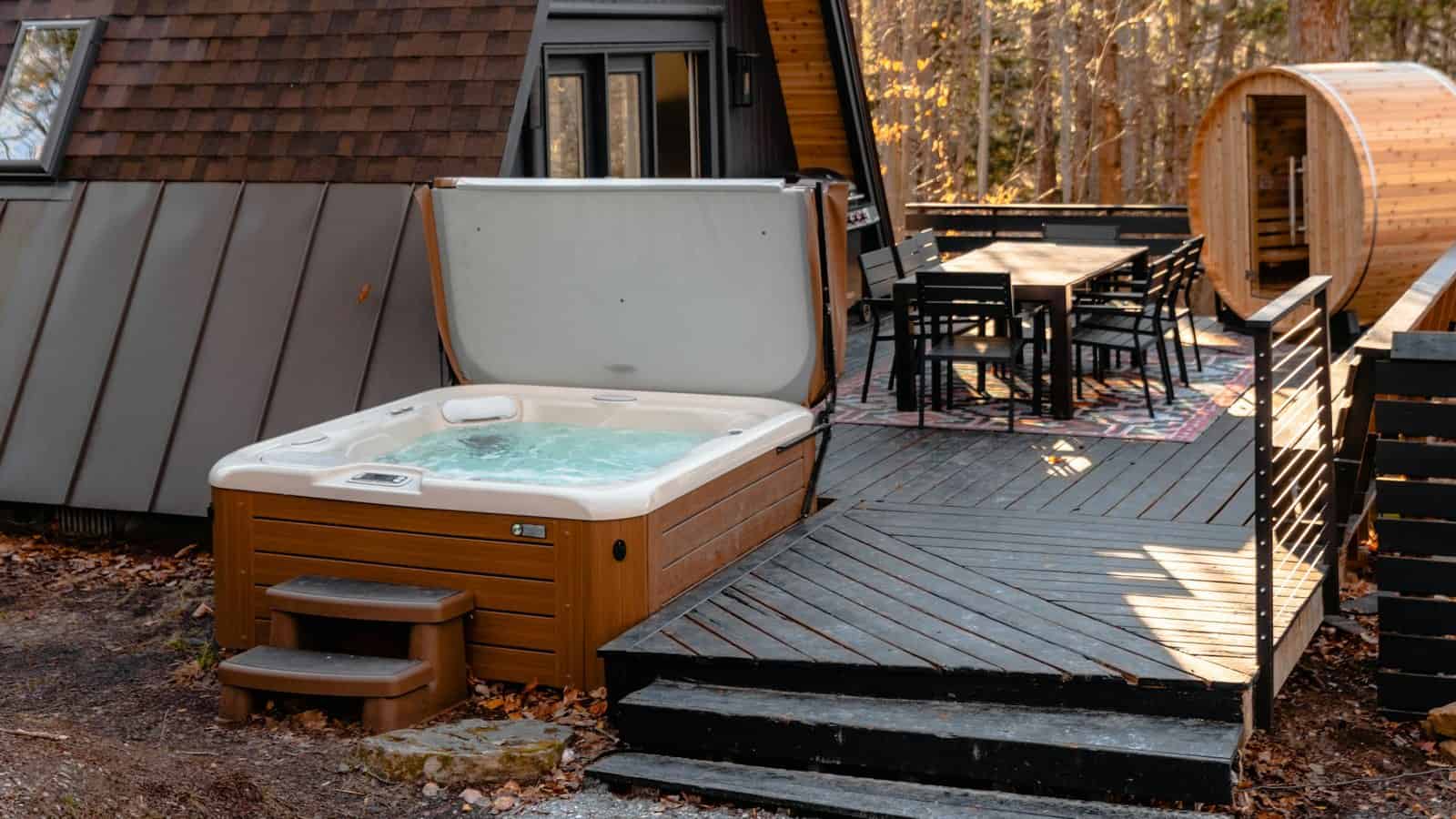
Most people do not decide to replace a hot tub cover. The cover decides for them, usually on a January night when it takes two hands and a grunt to lift one side, the middle sags with a puddle of snowmelt, and the spa underneath has been running its heater more than it should. By then the cover has probably been failing for a year or more. Waterlogged foam is quiet about it right up until it is not.
We have sold and serviced hot tubs in Cincinnati since 1966, and we stock spa covers, filters and water care at the store on Reading Road. This is the advice we give at the counter when someone drags in a cover that weighs as much as they do: how to tell when a cover is done, why Ohio weather finishes them off faster than the brochure suggests, and what actually matters when you pick the replacement.
The short version
- A hot tub cover needs to be replaced when it has gained noticeable weight, sags or holds water in the middle, has a cracked or torn vinyl skin, or no longer seals flat against the spa. Weight is the one that matters most, because it means the foam is waterlogged and the insulation is gone.
- Waterlogging is the normal way a cover dies. Chemical vapor and sun break down the vinyl and the plastic vapor barrier, the foam soaks up water, and every freeze and thaw after that makes it worse.
- In Greater Cincinnati, a cover that is conditioned a few times a year and never dragged across a deck gives you a good run of several seasons. One that is left to bake and freeze on its own is often done in half that time.
- You cannot dry out a waterlogged cover in any way that lasts. A torn skin on good foam can be patched; heavy foam means a new cover.
- When you replace it, the things worth paying attention to are foam density, taper, the vapor barrier, the hinge seal and the locking straps. Measure the spa itself, not the old cover.
How do you know when a hot tub cover needs to be replaced?
Replace a hot tub cover when it has become heavy to lift, sags or pools water in the middle, shows cracked, brittle or torn vinyl, smells musty, or lifts at the edges instead of sealing flat. Any one of those on its own is a warning. Weight gain means the foam is waterlogged, and that cover is finished.
The honest test is the one you already do every time you use the spa: lift it. A new cover for a six or seven person hot tub is something one adult can fold and lift without thinking about it. If the same cover now needs a second person, or you have started leaving it folded on the deck because putting it back is a chore, the foam inside has taken on water. That water is doing two things. It is adding weight, and it is replacing the trapped air that made the foam an insulator in the first place. A waterlogged cover is closer to a wet blanket than a lid.
Sagging is the second sign, and in this part of Ohio it usually shows up after a wet, heavy snow. A sound cover is tapered, thicker at the hinge and thinner at the outside edge, so rain and melt run off. When the foam has softened or the core has cracked, the middle drops, water sits in the low spot, and it soaks in from the top while the steam soaks in from below. A cover that holds a puddle is on its way out even if it still feels light enough.
Then there is the skin. Look at the hinge seam and the underside. Vinyl that has gone chalky, stiff or cracked lets water straight into the foam, and a tear on the underside is worse than one on top because it sits in chemical vapor all day. If the stitching along the hinge has let go, or the skirt that hangs over the edge of the spa has split, the seal is gone and the heater is paying for it. A musty smell when you open the cover is mildew in wet foam. That does not come back out.
| What you notice | What it means | Repair or replace |
|---|---|---|
| Cover is noticeably heavier than it used to be | Foam is waterlogged, insulation value is gone | Replace |
| Middle sags or holds a puddle after rain or snow | Foam has softened or the core has cracked | Replace |
| Musty or sour smell when you open it | Mildew inside wet foam | Replace |
| Small tear or scuff in the top vinyl, cover still light | Skin damage only, foam still dry | Patch it now, before water gets in |
| Torn or missing locking strap or clip | Hardware wear | Replace the strap, keep the cover |
| Edges lift, steam escapes around the rim | Skirt or hinge seal worn, or the cover has warped | Usually replace |
| Faded color, still light and flat | Normal sun wear | Keep it, condition it |
Why do hot tub covers get waterlogged and heavy?
A hot tub cover gets heavy because water has soaked into the foam core. Chemical vapor from the spa and sun from above break down the vinyl skin and the thin plastic vapor barrier wrapped around the foam, and once that barrier is breached, steam condenses inside the cover every day and never fully dries out again.
Inside a hot tub cover there are two foam panels, each sealed in a plastic vapor barrier, with a vinyl skin stitched over the whole thing. The foam is the insulation. The vapor barrier is what keeps it dry. The vinyl is what keeps the sun and the weather off the vapor barrier. When any layer gives up, the one under it starts failing, and the cover ages fast from there.
What breaks the layers is the spa itself. A hot tub sits at around 100 degrees with sanitizer in the water, and the underside of the cover lives in warm, chlorinated or brominated steam from the day it goes on. If the water chemistry runs hot or out of balance for long stretches, the vapor is harsher and the underside skin and barrier break down sooner. That is one of the reasons we push people to test their spa water regularly, which we cover in our beginner’s guide to hot tub water chemistry. Balanced water is easier on your skin and easier on your cover.
The top side gets the other half of the beating. A summer afternoon in Cincinnati puts a lot of UV on a dark vinyl cover, and the humidity keeps it from ever really drying. Then November comes, leaves from every oak and maple on the street land on it, and from December to March it freezes and thaws over and over. Water that found a pinhole in October turns to ice in the foam in January, expands, opens the gap a little wider, and lets more in at the next thaw. The Ohio Valley does freeze and thaw better than almost anywhere, and a tired cover is where it shows.
How long do hot tub covers last in Ohio?
In Greater Cincinnati, a hot tub cover that is kept clean, conditioned a few times a year, and lifted rather than dragged gives several good seasons. One that is left to the sun, the leaves and the freeze and thaw cycles on its own often needs replacing in half that time. Weight, not age, is the real measure.
We get asked for a number, and we are careful about giving one, because the covers that come through our door do not fail on a schedule. We have seen covers on shaded, well kept spas in Anderson Township still light and flat long after the owners expected to replace them, and we have seen covers on a sunny deck in Northern Kentucky go heavy in a couple of years because nobody ever wiped them down or treated the vinyl. The spa’s own chemistry matters too. A cover over a spa that is shocked properly and kept in range lasts longer than one living over water that is always a little harsh.
The habits that stretch a cover’s life are not complicated. Rinse it and wipe it down a few times a year, especially after pollen season and after the leaves drop. Treat the vinyl with a cover conditioner made for spa covers, not an automotive product with silicone or petroleum in it. We carry Sirona Spa Cover Care and Leisure Time Cover Care and Conditioner for exactly this. Open the cover for a few minutes after shocking the water so the strongest vapor escapes instead of soaking into the underside. Keep snow brushed off rather than letting it sit and melt into the seams. And use a cover lifter or two people instead of dragging the cover over the edge of the acrylic, which is how most hinge seams and skirts tear. The full care routine lives in our Cincinnati hot tub maintenance guide.
Can you repair a hot tub cover instead of replacing it?
You can repair the skin, the straps and the hardware, but not the foam. A small tear or seam split on a cover that is still light can be patched with a vinyl repair kit. Once the foam has taken on water and the cover is heavy, drying it out does not work and replacement is the only real fix.
The temptation with a heavy cover is to stand it on end in the sun for a week and hope. Some water does drain out that way, and the cover will feel a little lighter for a while. It will not stay that way. The vapor barrier that failed is still failed, the foam is still damaged, and the next few weeks over the spa put the water right back. We have had customers try this three or four times over a winter and spend more on the extra heater run time than a new cover would have cost them.
What is worth repairing is anything that is not the foam. A cut in the top vinyl from a dropped tool, a frayed locking strap, a cracked buckle, a skirt seam that has started to open: all of that is a quick fix with a vinyl patch kit or a replacement strap, and doing it the week you notice it is what keeps water out of the foam. Replacement foam cores and new skins for an existing cover exist too, and for some covers they make sense. In our experience, by the time an owner is pricing a new core, the skin, the hinge and the straps are usually in the same shape, and a complete new cover is the better buy. Bring the old one in, or send us photos, and we will tell you straight which side of that line you are on.
What should you look for in a replacement hot tub cover?
For an Ohio spa, look for a dense foam core, a taper so water runs off, a sealed vapor barrier around each foam panel, marine grade UV treated vinyl, a full length hinge seal, a skirt that reaches past the lip of the spa, and locking straps. A cover built for a mild climate will not hold up here.
Start with the foam, because that is the part doing the work. Spa cover foam comes in different densities, and the denser options are stiffer, hold more insulation value, and resist sagging under a wet snow load. A light density core is fine in a garage or a screened room. On an open deck in Loveland or Fort Thomas it is the first thing to go. Thickness matters alongside density, and so does taper: a cover that is thicker at the hinge than at the outer edge sheds water instead of holding it.
Next, ask how the foam is protected. Each panel should be wrapped and sealed in a vapor barrier, and the better covers use a heavier film or a double wrap. This is the layer that decides whether you get a long run out of the cover or a heavy one in three winters. The vinyl over it should be a marine grade material treated for UV and mildew, with stitching that is sealed or protected. Lighter colors run cooler in July and show dirt faster; darker colors hide the dirt and soak up more sun. We tend to steer people toward a mid tone that matches the cabinet unless the spa sits in full afternoon sun.
Then the details that separate a cover that seals from one that just sits there. A continuous heat seal along the hinge, so the fold line is not a gap for steam to escape. A skirt long enough to drop past the acrylic lip and close off the edge. Reinforced handles where you actually grab it. Locking straps with clips on all four sides, which keep the cover down in a March wind and keep kids and pets out. If you have a cover lifter or plan to add one, make sure the hinge and the skirt length work with it. The winter angle on all of this, including whether an enclosure or a gazebo makes sense for your spa, is in our guide to hot tub enclosure ideas for winter.
How do you measure a hot tub for a replacement cover?
Measure the spa, never the old cover. Record the length and width across the outside of the acrylic lip, the corner radius, which direction the hinge should run, the skirt length you need to clear the lip, and any cutouts or cabinet features. Measure twice, then bring the numbers, or your spa’s make and model, to the store.
An old cover has stretched, shrunk, sagged and warped, so it is the worst possible template. Measure the spa itself. Run a tape across the longest and widest points of the shell at the outer edge of the lip, and note whether the shell is square, rectangular, round or has a cut corner. The corner radius is the measurement people skip and then regret: hold a carpenter’s square against one corner and measure from the corner of the square to where the shell starts curving. Decide which way you want the fold, usually across the shorter dimension and away from where you climb in. Then check whether the spa’s cabinet or any stairs, lifter brackets or rails need the skirt to be shorter on one side.
If you bought the spa from us, the shortcut is the model name. Most of the Wellis and Dream Maker hot tubs on our floor have known cover dimensions, and we can match a replacement without a tape measure. If it is a spa from somewhere else, or an older model, bring the measurements and a couple of photos of the shell and the old cover’s hinge and we will sort out the rest. Either way, give the water a test while you are in. Free water testing is part of every trip to our Cincinnati pool and spa store, and a cover is only as good as the water it is sitting over.
What does a worn out cover cost you through a Cincinnati winter?
A waterlogged or badly sealed cover makes the heater run more than it should, because most of a hot tub’s heat leaves through the top. In a Cincinnati January that means a higher electric bill, a spa that struggles to hold temperature on cold nights, and extra wear on the heater and pump. The cover is the spa’s cheapest insulation.
Think of a spa as a bathtub of hot water sitting outside in 20 degree air. The cabinet is insulated. The ground under it does not pull much heat. The water surface is where the heat goes, and the cover is the only thing in the way. A dry, dense, well sealed cover holds that heat so the heater cycles a few times a day. A heavy, wet cover with a gap at the hinge turns the spa into a steam vent, and the heater runs to keep up. We wrote about the whole picture, including what the cover does to the monthly bill, in our post on what it takes to run a hot tub through an Ohio winter.
The other cost is comfort. The best part of owning a hot tub in this climate is a 102 degree soak while it is snowing. A spa under a failed cover drops a few degrees overnight and spends the evening catching up, which is exactly when you wanted to use it. If you are already in the shopping stage, our hot tub buying guide for Cincinnati covers what to look for in the spa itself. The cover deserves the same attention, because it is the part you touch twice every time you use it.
Where to get a replacement hot tub cover in Cincinnati
Cincinnati Pool and Patio has sold and serviced hot tubs since 1966, and the showroom at 10731 Reading Road in Evendale carries Wellis, Dream Maker and AquaZen spas, along with the covers, filters and chemicals that keep them running. Bring your measurements or your spa’s model name, and we will match a replacement cover built for Ohio weather rather than a one size fits most lid off a website. We can also quote a cover lifter at the same time, which is the single best thing you can do for the life of the new cover. Cost depends on size, foam density and the options you pick, so contact us for a quote or stop by.
While you are here, we will test your spa water for free and send you home with the right spa chemicals and a cover conditioner, so the new cover goes on over balanced water and gets the care that keeps it light. If you are thinking about a new spa instead of a new cover, every hot tub on our floor is filled and heated so you can wet test it, and we schedule delivery with you and go over the site and electrical requirements before it arrives. Everything you need for a hot tub in Greater Cincinnati, from our online store to the counter on Reading Road, is in one place.
Frequently asked questions
There is no fixed lifespan, because weight is what retires a cover, not age. In Greater Cincinnati, a cover that is conditioned a few times a year, kept clear of snow and leaves, and lifted rather than dragged gives several good seasons. A cover left to sun, steam and freeze and thaw cycles on its own is often waterlogged in half that time.
The foam inside has absorbed water. Spa vapor and sun break down the vinyl skin and the plastic vapor barrier around the foam, and once water gets in it condenses inside the cover every day. A heavy cover has lost most of its insulation value and needs to be replaced.
Not in a way that lasts. Standing the cover on end in the sun drains some water and lightens it for a while, but the failed vapor barrier lets the steam right back in once it is over the spa. Patch tears in the vinyl while the foam is still dry; once the cover is heavy, replace it.
It depends on the size and shape of the spa, the foam density and thickness, the vinyl grade, and options like a cover lifter. Bring your measurements or your spa’s model name to our Reading Road store, or contact us for a quote, and we will price a cover built for Ohio winters.
A dense, thick, tapered foam core, each panel sealed in a heavy vapor barrier, a marine grade UV treated vinyl skin, a continuous hinge seal, a skirt that drops past the lip of the spa, and locking straps on all sides. That combination holds heat through a Cincinnati winter and sheds snow instead of soaking it up.