




We Speak Pool and Spa.
We Got You.
Salt Water Hot Tubs vs Chlorine and Bromine: Which Water Care Fits You
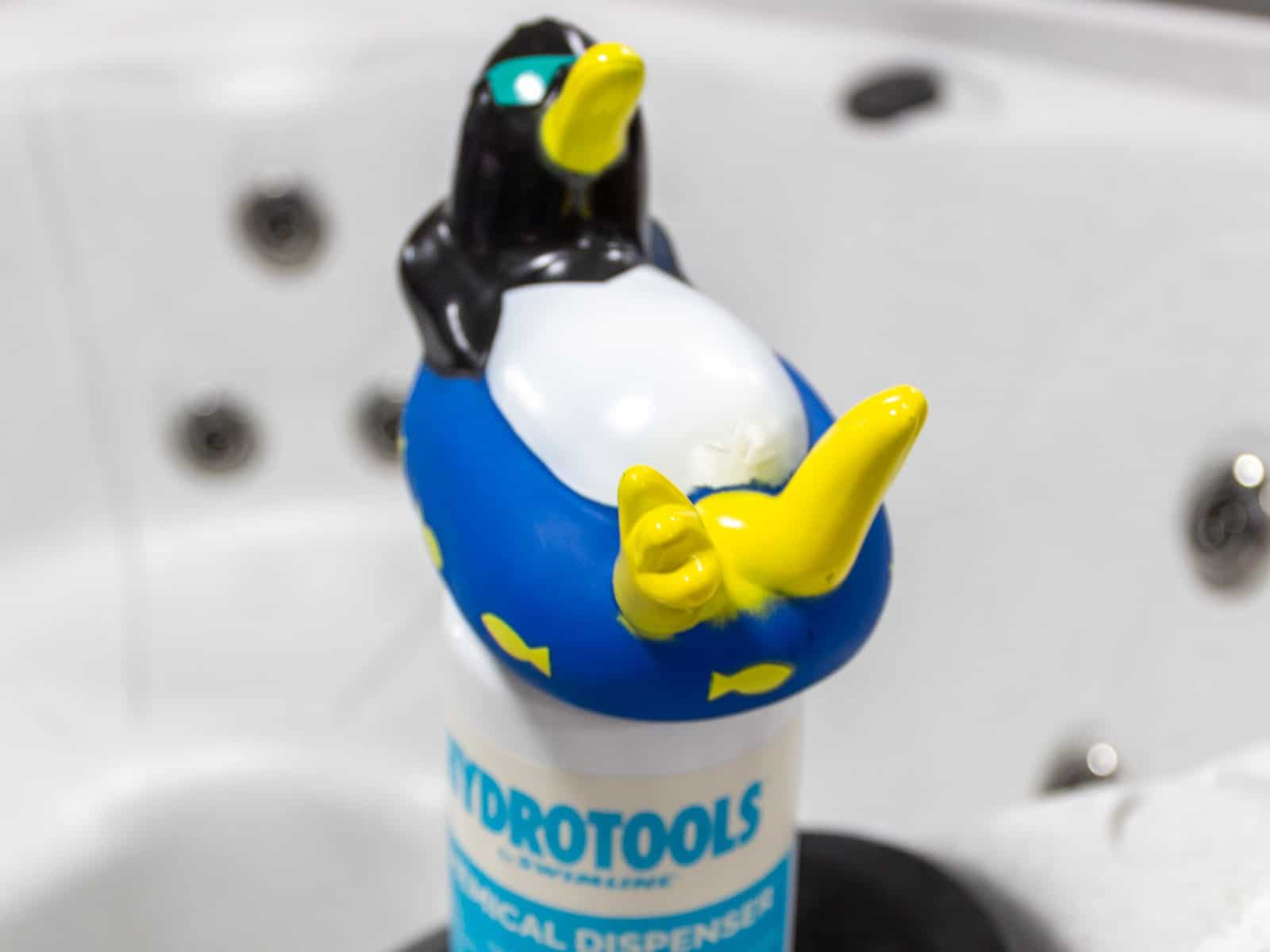
Somebody walks onto our floor on Reading Road most weeks and asks for a salt water hot tub. Usually a friend has one, or a pool in the neighborhood went to salt and the water felt better on their skin. It is a fair question, and the honest answer takes longer than yes or no, because a salt system is not a different kind of water. It is a different way of putting the same sanitizer in.
Cincinnati Pool and Patio has sold hot tubs in Cincinnati and kept their water clear since 1966, and we have watched spa care go from a scoop of chlorine to bromine floaters, mineral cartridges, chlorine-free systems and now salt cells. This guide puts the three main paths side by side: salt, chlorine and bromine. It explains what each one asks of you through a Greater Cincinnati winter with the fill water we have here, and it tells you plainly what we stock and what we do not.
The short version
- A salt water hot tub is not chlorine free. The cell converts dissolved salt into chlorine (a few systems make bromine instead), so you still hold a sanitizer level and still test the water. The cell does the dosing, not the thinking.
- Bromine is the sanitizer most hot tub owners around here end up on. It stays effective in water over 100 degrees and at the higher pH spa water drifts toward, and a floater does most of the work between soaks.
- Chlorine acts fastest and recovers a cloudy spa quickest, and the Sirona granules we stock sanitize and shock in one step, but chlorine burns off faster in hot water, so it asks for more frequent testing.
- None of the three brands on our floor, Wellis, Dream Maker and AquaZen, lists a salt system on its page here, and we do not stock an add-on salt cell. If you want salt, ask us by model before you buy. Never retrofit a cell the manufacturer has not approved.
- Whatever you pick, bring a water sample to Reading Road. We test it in store, and fill water across Greater Cincinnati and Northern Kentucky runs hard enough that scale, not sanitizer, is what usually shortens the life of a heater or a salt cell.
What is a salt water hot tub, and is it really chlorine free?
A salt water hot tub is a spa with a salt chlorine generator. You dissolve a small amount of salt in the water and an electrical cell converts it into chlorine as the water passes through. A few systems make bromine instead. Either way the spa still runs on a sanitizer: the cell does the dosing, you do the testing.
The word salt does most of the selling, so start with what the salt is actually doing. A salt system holds a low concentration of plain sodium chloride in the water, a fraction of what is in seawater, and runs it across a cell with a small electrical charge. That charge splits the salt and makes chlorine, the same chlorine you would otherwise pour in from a jar. The chlorine sanitizes, then turns back into salt, and the cycle repeats as long as the pump runs and the cell is clean. A handful of spa systems do the same trick with sodium bromide and make bromine instead.
So the water is not chlorine free. What people notice is that it feels different, and that part is real. A cell adds sanitizer in a slow, steady trickle instead of a weekly dump, so the level stays even and there is less of the combined chlorine, the chloramines, that give a neglected spa its sharp smell and its itch. The salt itself softens the feel of the water on skin. If a friend’s salt spa felt better than your bromine spa, that is why, and it is a legitimate reason to want one.
What the brochures leave out is the other half of the chemistry. Making chlorine in the cell also pushes pH upward, so a salt spa uses more pH decreaser than a hand-dosed one, and if pH gets away from you the chlorine stops working no matter what the cell is doing. The cell plates collect scale, and they collect it faster in hard water. Salt is harder on bare metal than fresh water is. None of that is a reason to avoid salt. It is the reason a salt spa is lower effort, not no effort, and why the four numbers in our hot tub water chemistry guide still apply to it.
Salt water vs chlorine vs bromine: how do the three actually differ?
Chlorine is added by hand, works fast and burns off fast in hot water. Bromine comes from tablets in a floater or from a bromide reserve plus an oxidizer; it works slowly but stays stable at spa temperatures and higher pH. Salt is chlorine or bromine made by a cell, and it needs testing, pH control and a clean cell.
Here is how the three compare on the things that actually decide the question for a homeowner. We have left price out on purpose. Stop by and we will walk you through it for the spa you are looking at.
| What matters | Chlorine | Bromine | Salt system |
|---|---|---|---|
| How the sanitizer gets in | You add granules by hand, daily or as needed | Tablets in a floater, or a bromide reserve activated by shock | A cell makes it from dissolved salt while the pump runs |
| What you test for | Free chlorine, 2 to 3 ppm per the Sirona label | Active bromine, 2 to 4 ppm per the Sirona label | Chlorine or bromine residual, plus salt level |
| Behavior at 100 to 104 degrees | Burns off quickly; levels swing between doses | Stays effective; tolerates the higher pH spa water drifts toward | Steady output as long as the cell is clean and pH is held |
| Smell and feel | Sharp when neglected; fine when shocked on schedule | No pool smell when it is working; some people notice a faint odor on skin | Softest feel; lowest chloramine smell |
| The weekly chore | Test, dose, shock weekly | Test, refill the floater, shock weekly | Test, lower pH as needed, check the cell |
| What goes wrong first | A missed dose after a crowded night | A floater left wide open, bleaching the cover | Scale on the cell plates and the heater from hard water |
| Switching away from it | Easy; add bromide and you are on bromine | Drain and refill; leftover bromide converts new chlorine | Drain, and only if the spa was built for salt in the first place |
| Who it suits | Daily soakers and hosts who want fast recovery | Most year-round outdoor spas and owners who want the fewest surprises | Buyers of a factory salt spa who will keep up with pH and cell care |
Two things on that table deserve a second look. The first is the switching row. Chlorine to bromine is a one-way door you can walk through without draining: build a bromide reserve with sodium bromide, drop tablets in a floater, and from then on the spa is a bromine spa until the next drain. Bromine to chlorine does not work that way, because any bromide still in the water turns the chlorine you add straight back into bromine. The second is the salt row. A salt spa that was not built for salt is not a water care choice. It is a warranty problem, and we get to that below.
Is bromine better than chlorine for a hot tub?
For most hot tub owners, yes. Bromine stays effective at spa temperatures and at the higher pH spa water drifts toward, it does not smell like a pool when it is working, and a floater holds a steady level between soaks. Chlorine wins on speed: it clears a cloudy spa faster and recovers from a crowded Saturday night quicker.
Ask anyone behind our counter which sanitizer they would put in a spa that sits outside in Loveland or Fort Thomas twelve months a year and you will get the same answer: bromine, in a floater, with a non-chlorine shock once a week. The reason is temperature. Chlorine is a sprinter. It kills fast and then it is gone, and in water over 100 degrees it is gone faster still, which means the level you measured Tuesday may be nothing by Friday. Bromine is a distance runner. It keeps working at spa heat, it keeps working as pH creeps up, and after you shock the water it reactivates from the bromide reserve instead of needing a fresh dose.
That is why the Sirona spa bromine tablets and the sodium bromide that builds the reserve move off our shelves faster than anything else in the spa aisle. The label math is simple: hold 2 to 4 ppm of active bromine, test it, open or close the floater to steer it. The mistake we see most often is a floater set wide open and parked under the cover. Bromine at that level bleaches the underside of a cover and fades a headrest. Set the floater low and adjust from the test strip, not from a guess.
Chlorine has a real case too, and some of our longest-running customers will not use anything else. If you soak most evenings, host a crowd on game days, or just like being able to fix cloudy water tonight instead of by the weekend, chlorine responds faster than bromine does. The Sirona chlorinating granules are made for spas and do two jobs: a small daily dose sanitizes at 2 to 3 ppm, a larger weekly dose shocks. The trade is attention. You test more, you dose more often, and you learn to shock right after the crowd leaves, not the next morning. One thing we say plainly in our hot tub maintenance guide and will repeat here: we do not run a spa cleaning route. Whichever sanitizer you choose, you are the one holding the level, so choose the one you will actually keep up with.
Can you add a salt system to any hot tub?
No. A salt cell belongs on a spa the manufacturer built or approved for it, because salt water is harder on heaters, fittings and some lighting, and an unapproved retrofit can void a warranty. None of the three brands on our floor lists a salt system on its page here, so ask us by model before you buy.
This is the part of the salt conversation that matters most and gets said least. A salt system is not an accessory you bolt on after the fact. The cell has to sit in the plumbing where the pump will push water through it, the heater element has to be a material that tolerates salt, and every fitting and light housing the water touches has to be rated for it. Spas built for salt are built that way from the factory. Spas that were not can be converted with aftermarket drop-in cells, and we have seen what that does to a heater over a couple of seasons. The warranty on the spa usually does not survive it either.
So here is where we stand, and we would rather say it than have you find out later. The three brands on our floor are Wellis, Dream Maker and AquaZen, and none of the three lists a salt system as a factory option on its page here. We do not stock an add-on salt cell, and we are not going to sell you one for a spa it was not built for. If a salt spa is what you want, say so when you visit the showroom and we will check by model whether a factory salt option exists for the spa you like. If it does not, the right move is to pick the spa for its seats, its power and its insulation, the way we lay out in our comparison of the brands on our floor, and run it on bromine or chlorine. You will get most of the soft-water feel from a mineral cartridge, and all of the reliability.
How does a Cincinnati winter change the decision?
Spa water runs over 100 degrees, so a salt cell keeps making chlorine in January, unlike a pool cell. What winter changes is everything around the cell: a power outage that cools the water, a cover that stays closed for weeks, and hard fill water that scales the cell and the heater. Bromine handles all three with the least attention.
People who have owned a salt pool worry that a salt spa will quit in the cold, because a pool cell stops producing when the water drops into the fifties. A spa does not have that problem. It is holding 100 degrees under an insulated cover whether it is July or January, so the cell produces all winter. The winter problems are different ones, and they catch chlorine and salt owners more than bromine owners.
The first is the outage. An ice storm takes the power out in Anderson Township for a day and a half, the water cools, the pump stops, and a salt cell makes nothing while the pump is off. A hand-dosed chlorine spa is in the same spot. A bromine spa with a floater and a bromide reserve just keeps releasing sanitizer into still water. The second is the quiet stretch. A spa that goes unused for three weeks in February under a closed cover has a low sanitizer demand but no circulation of fresh air, and whatever is in the water has time to do its work. Again, a floater is the thing still working. We covered what a closed cover and a cold snap do to your electric bill in our hot tub running costs post, and the chemistry follows the same logic: the less the spa does on its own, the more you want a sanitizer that does not need you.
The third is the one nobody mentions in a salt brochure written somewhere with soft water. Fill water across Greater Cincinnati and Northern Kentucky runs on the hard side, and a spa gets topped off and refilled more often in winter because of evaporation under a lifted cover. Hard water means calcium, and calcium comes out of solution onto the hottest and most electrically active surfaces in the spa: the heater element and, in a salt system, the cell plates. A scaled cell makes less chlorine and dies young. A scaled heater trips on high limit. Test your fill water before you choose a system, and if it tests hard, plan on a metal and scale control from the first fill, whatever sanitizer you run.
What about the chlorine-free routes: minerals and the Sirona Simply system?
Mineral cartridges cut how much chlorine or bromine you need, by up to half per the Sirona label, but they do not replace it; the spa still carries a small sanitizer residual. The Sirona Simply system is a true chlorine-free, bromine-free liquid sanitizer that runs as its own three-step program and does not mix with chlorine or bromine.
Half of the people who ask us about salt are really asking for less chlorine, and there are two ways to get there on a spa that was never built for a cell. The first is a mineral cartridge. Sirona Spa Minerals is a silver-based cartridge that sits in the filter well and, per the label, reduces chlorine or bromine use by up to half and lasts up to four months. You still hold a 1 ppm residual of bromine or chlorine alongside it. A spa run on minerals alone is a spa that will grow something; we have said that before and it is still true. Pair the cartridge with a borate product such as the Natures Pure Spa Energizer and the water gets most of the soft, non-itchy feel people chase with salt.
The second route is the one for people whose skin genuinely reacts to chlorine and bromine. Sirona Simply, which long-time spa owners will remember under its old Baquaspa name, is a liquid sanitizer with no chlorine and no bromine in it. It is stable at spa temperatures, lasts longer in hot water than either, and runs at a 50 ppm level per the label instead of the 2 to 4 ppm you hold with bromine. Two rules come with it. It is step three of its own three-step system and you use the matching oxidizer and clarifier, not a chlorine shock. And it does not coexist with chlorine or bromine, so moving a spa onto it or off it means a drain, a clean filter and a fresh fill. It is the right answer for a specific household. It is not the default.
Which hot tub water care should you pick?
Pick bromine if you want the fewest surprises and the spa sits outside year round. Pick chlorine if you soak most days, host crowds and want the fastest recovery. Pick a factory salt system if soft feel matters most and you will keep up with pH and cell cleaning. Pick Simply if chlorine and bromine irritate your skin.
Walk through it the way we do at the counter. A couple in Mason who will use the spa three or four nights a week, mostly in the cold months, and who travel for a week at a time: bromine in a floater, a mineral cartridge if they want softer water, non-chlorine shock on Sundays. A family in Florence with teenagers and a rotating cast of their friends on weekends: chlorine granules, because the bather load swings and chlorine catches up faster, plus the same weekly shock. A buyer who has decided on a specific spa that comes with a factory salt system and who likes tinkering with water: salt, with a test strip that reads pH and a calendar reminder to look at the cell. Someone who breaks out in a rash after a hotel pool: Simply, from the first fill.
Make the water care decision before delivery day, not after. We deliver the spa to your pad; your electrician runs the circuit, you fill it from the hose, and the very first thing that goes into that fresh fill is whichever program you chose, because the start-up dose is what sets the water up for the next three months. Bring the fill water in for a test before the spa arrives and you will know whether you are starting with a scale problem. And if you are still deciding between spas, take the wet test seriously. Sit in the water on our floor and ask what it is sanitized with. Feel is the one thing a spec sheet cannot show you.
Where do you get spa chemicals and your water tested in Cincinnati?
At our store at 10731 Reading Road in Evendale. We stock Sirona bromine tablets, chlorinating granules, sodium bromide, Spa Minerals, the Simply system, non-chlorine shock and LaMotte test strips, and we test spa water in store. Bring a sample in a clean jar. We are open Monday through Saturday, closed Sunday through the winter.
Everything in this post is on the shelf in our pool and spa supply store, and most of it is in the spa chemicals section online if you would rather order ahead. The one thing you cannot buy online is the water test, and it is the one thing we would push you toward. A home strip such as the LaMotte Insta-TEST 6 Plus reads sanitizer, pH, alkalinity and hardness well enough for the weekly check. The in-store test is for the questions a strip cannot answer: why the water will not hold a bromine level, why it keeps going cloudy, whether the fill water is behind the scale on your heater.
If the spa is still a decision rather than a possession, start with the hot tub buying guide, then come sit in one. Tell us how you want the water to feel and how much attention you are honestly going to give it, and we will tell you which program fits, which spa on our floor fits, and whether a factory salt option exists for it. That is a better answer than a ranking written three states away, and it has been our answer since 1966.
Frequently asked questions
Yes, if the spa was built or approved for it by the manufacturer. A salt cell needs plumbing that routes water through it, a heater and fittings rated for salt, and a warranty that allows it. None of the three brands on our Cincinnati floor lists a salt system on its page here, so ask us by model before you buy. Never retrofit an aftermarket cell onto a spa that was not built for one.
Follow the owner’s manual for your spa. The usual hot tub rule is a drain and refill every three to four months, sooner with heavy use, and some salt system makers allow longer between drains because the cell keeps the sanitizer level steady. Drain whenever the water stops responding to balancing, whatever the calendar says, and have the fill water tested if scale keeps coming back.
No. Add sodium bromide to build a bromide reserve, then run bromine tablets in a floater and shock with a non-chlorine oxidizer. Once bromide is in the water the spa is a bromine spa until the next drain. The reverse is not true: switching from bromine back to chlorine requires a drain and refill, because any bromide left in the water converts the chlorine you add into bromine.
Yes. Spa water is held above 100 degrees under the cover, so the cell keeps producing in January, unlike a pool cell in cold water. The winter risks are a power outage that stops the pump, a long unused stretch under a closed cover, and hard fill water scaling the cell. A bromine floater keeps releasing sanitizer through all three, which is why it is our usual recommendation for an outdoor spa here.
We do not stock add-on salt cells, and we will not sell one for a spa that was not built for salt. The spas on our floor are Wellis, Dream Maker and AquaZen; ask us by model whether a factory salt option exists for the one you like. We do stock everything for chlorine, bromine, mineral and Sirona Simply care, and we test spa water in store at 10731 Reading Road in Evendale.