




We Speak Pool and Spa.
We Got You.
Plug and Play Hot Tubs: What a 120V Spa Means for a Cincinnati Backyard
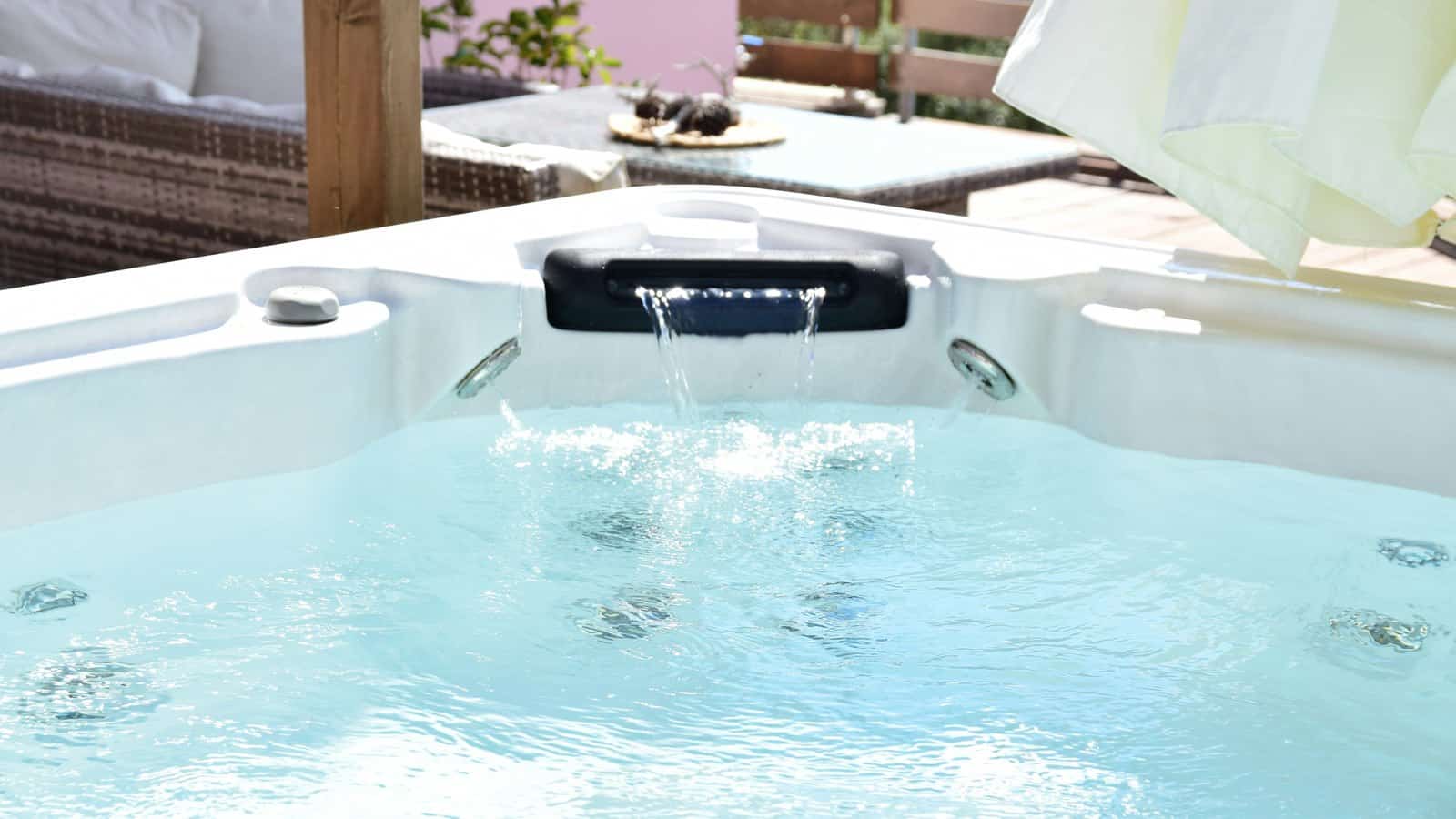
“Plug and play” is the phrase that gets the most nods on our showroom floor and the most confusion a week later. The pitch is simple. The spa comes with a cord, you plug it into a regular outdoor outlet, you fill it with a garden hose, and you are soaking that night. All of that is true. What the phrase leaves out is what a standard household circuit can and cannot do once the water is at 100 degrees and it is 19 degrees outside in Mason.
Cincinnati Pool and Patio has sold and serviced hot tubs in Cincinnati since 1966, and plug and play spas are a real share of what leaves our floor on Reading Road. This guide explains what a 120V spa is, where it shines, where a 240V spa wins, which models we carry are plug and play, and what the electrical side looks like for a homeowner in Hamilton, Butler, Warren or Clermont County, or across the river in Northern Kentucky.
The short version
- A plug and play hot tub runs on a standard 120V household outlet through a cord with a built-in GFCI plug, so there is no new 240V circuit to run and no electrician is required to get it going.
- The trade off is heat. A 120V spa warms slowly from a cold fill, and most of them pause the heater while the jets run on high, which matters most on a January night in Cincinnati.
- A 240V spa heats several times faster and runs the heater and the jets together, but it needs a licensed electrician, a dedicated circuit, a disconnect within sight of the tub and, in most of our area, an electrical permit.
- On our floor the Wellis Oslo Life P&P and Milano Life P&P are plug and play, the Milano Life also comes as a 240V spa, and many Dream Maker models run on a standard outlet.
- We deliver the spa and go over the site and electrical needs with you before delivery day. The outlet or the 240V circuit is the homeowner’s side, done by an electrician, and it should be ready before the truck arrives.
What is a plug and play hot tub?
A plug and play hot tub is a spa built to run on a standard 120V household outlet. It ships with a cord that has a GFCI safety plug built in, so you plug it into an outdoor outlet, fill it with a hose and let it heat. No new 240V circuit, no hardwiring, no electrician required to start it.
Every hot tub needs electricity for the same three jobs: a pump to move water, a heater to warm it, and a control pack to run both. A hardwired spa gets that power from a 240V circuit an electrician runs from your panel into the equipment bay. A plug and play spa gets it from the same kind of outlet your patio lights use. The cord carries a bulky GFCI block near the plug, with a test and reset button, and it shuts the power off the instant it senses current going somewhere it should not.
You will see these spas called 110V, 115V and 120V in different brochures. They are all the same thing. The household standard in this country is 120 volts, and the older names stuck around. What is different inside the cabinet is the size of the heater and how the control pack shares a limited supply of power between the heater and the pump. That sharing is the whole story of plug and play ownership.
One more term worth knowing: convertible. Some spas are built so an electrician can switch them from the 120V cord to a 240V circuit later. On our floor the Wellis Milano Life is sold either way. If your electrical situation might change, ask about that on the model you like, because not every plug and play spa can make the jump.
How does a 120V spa keep up in a Cincinnati winter?
A 120V spa keeps up in winter if it stays covered between soaks and the thermostat stays set rather than turned down. Under a good cover it holds temperature well. Where it struggles is recovery. After a long soak with the jets on high on a January night, the water can drop several degrees and take hours to climb back.
This is the question that decides whether a plug and play spa is right for a house in Greater Cincinnati. Holding heat and making heat are two different jobs. Holding heat is the cover’s work and the cabinet insulation’s work, and a 120V spa with a tight cover does that fine at 10 degrees. The Wellis spas we carry use a Scandinavian insulation system built to keep the motor’s warmth inside the cabinet, and the plug and play Wellis models get the same shell and cabinet as their 240V siblings.
Making heat is where the smaller supply shows. On a mild evening you never notice, because the spa sits at temperature all day and you step into water that is ready. On a cold night with four people in it for forty minutes, the jets on high and the cover off, the water gives up heat faster than the heater can replace it. In most 120V spas the heater also drops out while the pump is on high, because the circuit cannot carry both at once. You get out of water that has cooled a few degrees, close the cover, and the spa spends several hours getting back to where it started.
Two habits make winter easy on a plug and play spa. First, leave the heat set at your soaking temperature all season. Turning it down between uses costs more in recovery time than it saves, and it is the most common mistake we hear about in February. Second, treat the cover as part of the heating system. A waterlogged cover hurts a 120V spa more than a 240V spa, because the smaller heater has less margin to fight it. Our guide to hot tub cover replacement has the signs, and what drives hot tub running costs in an Ohio winter covers the bill.
One warning for every spa: if an ice storm takes your power out for more than a day, the plumbing is at risk on either voltage. Know where the drain is and keep our number handy that week. Our older post on using your hot tub during the winter has the rest of the cold-weather habits.
Plug and play vs 240V: which one should you buy?
Buy a plug and play spa if you want a two to five person tub, you soak for twenty or thirty minutes at a time, and running a 240V circuit is hard or expensive at your house. Buy a 240V spa if you want six or more seats, strong jets and full heat together, or long winter soaks.
We have sold both for a long time, and the decision is less about the spa than about the house and the people. A couple in a Hyde Park condo with a shared electrical room and a small patio gets a plug and play spa and is happy with it for years. A family of five in a newer West Chester build with a 200-amp panel, a big deck and three teenagers who will be in it every night of winter break wants the 240V spa, and would be frustrated by the 120V version within one season.
Here is the side by side we give people at the store. The row that usually settles it is heater and jets together.
| Question | Plug and play (120V) | Hardwired (240V) |
|---|---|---|
| Power source | Standard outdoor outlet through a GFCI cord | Dedicated circuit from the panel, hardwired by an electrician |
| Electrician needed | Not required to run it. Recommended for a dedicated outlet. | Required, with a disconnect and GFCI protection |
| Permit and inspection | Usually none for the spa itself | Usually an electrical permit for the new circuit |
| Heat-up from a cold fill | Slow. Plan on the better part of a day in winter. | A few hours |
| Heater and jets at the same time | In most models the heater pauses while the pump is on high | Both run together |
| Typical size | Two to five seats | Three seats to nine |
| Winter recovery after a long soak | Hours | Well under an hour in most cases |
| Moving it to a new house | Unplug and go | Needs a new circuit at the next house |
Which hot tubs on our floor are plug and play?
On our Reading Road floor the Wellis Oslo Life P&P (three seats, 30 jets, 79 by 59 by 31 inches) and the Wellis Milano Life P&P (five seats, 36 jets, 85 by 75 by 34 inches) are plug and play. The Milano Life also comes as a 240V spa, and many Dream Maker models run on a standard outlet.
The Oslo Life P&P is the one we point couples to. Two of its three seats are loungers, so two people can both lie back under its 30 jets, and the footprint at just under seven feet by five fits a small patio or the corner of a deck. It is also the smallest spa on our floor, a question we cover in hot tub sizes for Cincinnati patios.
The Milano Life P&P is the plug and play spa for a family. Five seats, one of them a lounger, 36 jets, and a shell big enough that four adults are not trading elbows. Because it is sold both ways, it is the spa we suggest when a buyer wants to start on a standard outlet and keep the option of a 240V circuit later. On the Dream Maker side, the brand is built around plug and play convenience and energy efficiency, and many of their models run on a standard outlet. Which ones depends on the current lineup, so ask us on the model you are looking at rather than assuming. We also carry AquaZen, eight models from three to seven seats, and we will tell you what power each one takes.
The best way to settle it is to sit in both. Call ahead to 513-554-0000 and we will have a filled, heated spa ready at 10731 Reading Road in Evendale. A wet test tells you more in ten minutes than a spec sheet does in an hour, because you will feel exactly how strong the jets are on a 120V pump.
What does the electrical work look like for a 240V hot tub?
A 240V hot tub needs a dedicated circuit from your panel, run by a licensed electrician, with GFCI protection and a disconnect switch mounted within sight of the spa and at least five feet back from the water. Most building departments in Greater Cincinnati and Northern Kentucky require an electrical permit and an inspection for that new circuit.
This is where the house decides. A 240V spa draws from its own breaker, and that breaker has to fit in a panel with capacity to spare. In a 1990s or newer home in Liberty Township or Union, Kentucky, that is usually no problem. In the brick two-story houses in Norwood, Westwood and Fort Thomas that were wired in the 1940s and 1950s, the panel is often full, and sometimes it is a 100-amp service already carrying a furnace, a dryer and a range. Adding a hot tub circuit there can mean a service upgrade first, a real cost before the spa is even on the truck. It is the most common reason a buyer who wanted the big 240V spa ends up very happy with a plug and play one instead.
The run from the panel to the pad is the other variable. An electrician’s quote is driven by distance and by what is in the way: a finished basement ceiling, a concrete patio, a trench across a sloped yard. We never give electrical numbers, because the electrician is the one who will see your panel. What we give you is the spa’s exact requirements in writing, so it gets quoted right the first time.
On permits, nearly every jurisdiction here wants an electrical permit for a new 240V circuit, and the inspector will look at the GFCI protection, the disconnect location and the bonding. Your electrician pulls that permit as part of the job. We tell you what the spa needs and we deliver it to the prepared site. We do not run the circuit, wire the spa or start it up, and we say so plainly so nobody is standing on delivery day waiting for an electrician who was never called. Have the circuit finished and inspected before the delivery date, not after.
Do you need an electrician for a plug and play hot tub?
No electrician is required to run a plug and play hot tub, because it plugs into a standard outdoor outlet. That outlet needs to be GFCI protected, weather rated and, ideally, on its own circuit with nothing else on it. If the nearest outlet shares a circuit with deck lights or a freezer, have an electrician add a dedicated one.
The cord is where plug and play ownership goes right or wrong, so a few rules we repeat at the store. Never run the spa on an extension cord. The cord on the spa is sized for the load, and a longer, thinner cord heats up, trips the GFCI, and in the worst case starts a fire. If the outlet is too far away, the fix is a closer outlet, not a longer cord.
The next rule is about what else is on the circuit. A plug and play spa pulls close to what a standard circuit can carry when the heater is running. If that circuit also feeds the deck lights, the patio speakers and a chest freezer in the garage, the breaker trips at the worst moment, usually when the heater kicks on at dusk. We hear about this every fall from people who plugged a new spa into the outlet that was already there. An electrician can add a dedicated 120V outlet near the pad for far less work than a 240V circuit, usually with no trench and no panel issue, and it ends the tripping for good.
Keep the outlet back from the water, too. The electrical code keeps receptacles a set distance from a spa, and your electrician knows the current number. The plug should not be where a wet hand reaches for it from inside the tub, and the GFCI block on the cord should sit somewhere dry rather than in a puddle at the base of the cabinet. Test that GFCI button once a month. It takes five seconds.
What happens on delivery day for a plug and play spa?
We schedule delivery with you and go over the site and the electrical needs before the spa arrives. On delivery day the spa is brought to the prepared pad or deck. Filling it, plugging it in, treating the water and the first heat-up are the homeowner’s side, and we walk you through each one before you leave the store.
A plug and play spa is the simpler delivery of the two, but the site still has to be ready. The spa needs a level base that will not settle, which on the ground means a concrete pad or a purpose-built spa pad, and on a deck means framing that a deck builder or structural engineer has confirmed can carry a filled spa and the people in it. Our older post on installing a hot tub walks through pad and deck prep. The path from the driveway to that spot matters just as much: gate width, steps, the gap between the house and the fence, and we go over all of it with you when we schedule.
Once it is in place, the start-up is on the homeowner, and it is not hard. Fill it with a garden hose. Plug the cord in and press the reset button on the GFCI block. Set the thermostat and close the cover. Hose water in Cincinnati runs cold most of the year, and getting from there to soaking temperature on a 120V heater takes the better part of a day, so fill it in the morning rather than at dinner time if you want to soak that night.
The water needs balancing from day one. Pick up a start-up kit from our spa chemicals shelf when you buy, bring a cup of your fill water in for a free test, and follow our hot tub water chemistry guide for the first week. After that the routine is the same as any spa, and our hot tub maintenance guide lays it out by week, month and season.
When is a plug and play hot tub the wrong choice?
A plug and play spa is the wrong choice when you want six or more seats, you plan long soaks with the jets on high through January, or several adults will use it at once most nights. The slow heat recovery on 120V will frustrate you within a season in those cases, and a 240V spa is the better buy.
We would rather say this before you buy than hear it in March. The plug and play pitch is strong and the electrical savings are real, so people talk themselves into a 120V spa that is the wrong tool for how they will use it. The pattern is always the same. The spa is wonderful in October. By January the family is in it every night, the jets are on high for an hour, the water keeps dropping, and the owner turns the thermostat up, which does nothing because the heater is already working as hard as it can. That is not a defective spa. It is a 120V heater being asked to do a 240V job.
If any of those three conditions describe you, call an electrician before you shop, get a real quote for a 240V circuit at your house, and bring that number to the showroom along with our hot tub buying guide for the seating side. Sometimes the circuit is simpler than people feared and the 240V spa is the clear winner. Sometimes the panel is the problem and the answer is a convertible spa like the Milano Life, started on the cord now and moved to a circuit when the panel gets upgraded. Either way you are deciding with real numbers instead of the brochure.
For a couple, a small family, a soak-and-go household or a house where a 240V circuit is a genuine obstacle, a plug and play spa is not a compromise. It is the right spa, and the owners who matched the spa to the house are the ones still soaking in year five. If you want to winter it under a roof, our guide to hot tub enclosures for winter covers gazebos and pergolas that suit a 120V spa as well as any other.
If you are weighing a plug and play spa against a 240V model, the fastest way to decide is to sit in both. Stop by the showroom at 10731 Reading Road in Evendale, Monday through Saturday, or request a quote and tell us about your yard and your panel. You can also contact us with a photo of where the spa will go and where the nearest outlet is, and we will tell you which models fit and what each one needs for power. We deliver across Greater Cincinnati and Northern Kentucky, and our service area pages cover the communities we reach most. Everything else for the spa, from the cover lifter to the test strips, is on the shelf at the store.
Plug and play hot tub questions we hear at the store
Yes. A 110V hot tub, a 115V hot tub and a 120V hot tub are the same thing, a spa that runs on a standard household outlet. The household standard in the United States is 120 volts, and the older 110 and 115 names have stuck around in brochures and search results. Plug and play means the same thing.
From a cold fill with Cincinnati hose water, plan on the better part of a day for a plug and play spa to reach soaking temperature, and longer in winter. A 240V spa does the same job in a few hours. Keep the cover on while it heats, and fill it in the morning if you want to soak that night.
Some can. The Wellis Milano Life on our floor is sold as either a plug and play or a 240V spa. Other models are built for 120V only. Ask about the specific spa before you buy if you think you may want to convert later. The conversion and the new circuit are an electrician’s job, never a do it yourself project.
For a hardwired spa, the electrical code requires a disconnect switch within sight of the hot tub and at least five feet back from the water, so power can be cut without reaching across the tub. The code also keeps outlets a set distance from the spa. Your licensed electrician and the local inspector apply the current version of both rules.
Yes. Plug and play spas are used all winter across Greater Cincinnati. Leave the heat set at your soaking temperature, keep a sound cover on it between uses, and expect slower recovery after a long soak with the jets on high. Never let it sit without power in freezing weather, because the plumbing can freeze.