



We Speak Pool and Spa.
We Got You.
Gas vs Charcoal vs Pellet Grills for Cincinnati Backyards
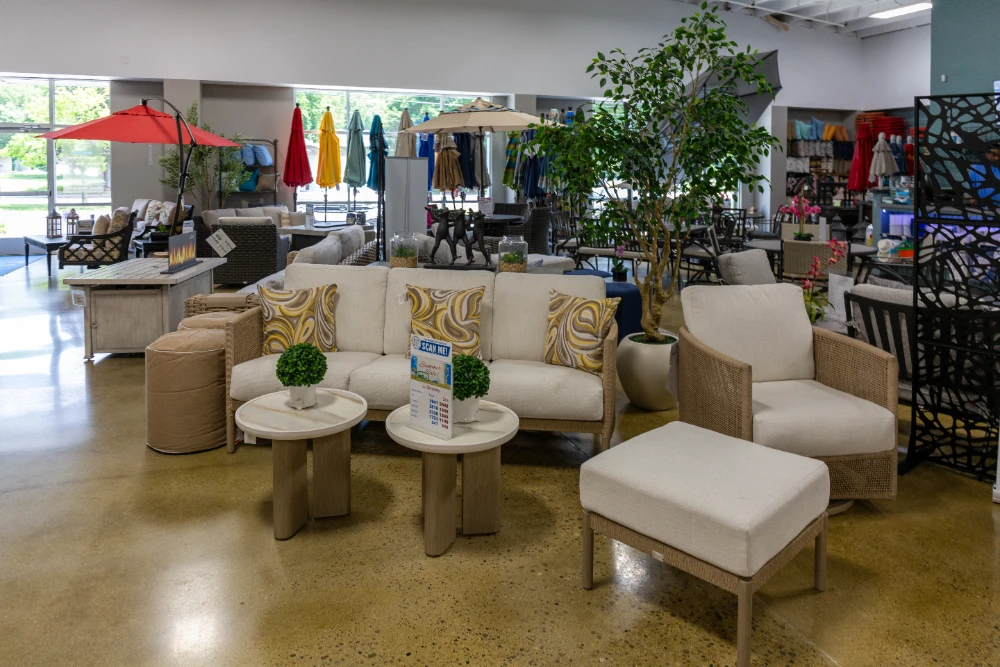
Late September brings the grill question into our store in a different mood than May does. In spring people want something fast before the first cookout. By fall they have cooked a summer on a cheap one, watched the lid warp and the burners sputter, and they want to buy once and be done. That is a better frame of mind to shop in, and the gas grill vs charcoal debate, with pellet grills now firmly in the mix, is where it always starts.
We have sold backyard equipment on Reading Road since 1966, and we will tell you up front that none of the three is the wrong answer. Each one suits a way of cooking, a kind of yard and a level of patience. What follows is how we sort it out with customers standing in front of the grills on our floor, adjusted for the humidity, wind and freeze-thaw winters that Greater Cincinnati and Northern Kentucky put a grill through.
The short version
- Gas is the weeknight grill. It is hot in ten minutes, easy to control, and the one most families actually use three times a week.
- Charcoal is for cooks who want the fire to be part of the afternoon. The flavor is real, and so is the extra half hour and the ash.
- A pellet grill is a wood-fired oven with a thermostat. It is superb at low and slow cooking and weaker at searing, and it needs electricity and dry pellets.
- Judge a grill by lid weight, grate material and burner construction, not by the burner count or the biggest BTU number on the box.
- Ohio humidity and winter are hard on painted steel. Buy stainless where it matters, use a cover, and the grill will outlast the deck it sits on.
Gas, charcoal or pellet: which grill should you actually buy?
Buy the grill that matches how you cook on an ordinary Tuesday, not the one that matches the party you throw once a year. Gas suits fast weeknight cooking and most families. Charcoal suits people who enjoy managing a fire and want the flavor. A pellet grill suits long, unattended smoking with set-and-forget temperature control.
Most people walk into our grill showroom in Cincinnati trying to pick a fuel. The better questions are how often you cook outside, how long you will wait for dinner, and who does the cooking. A grill that takes forty minutes to get ready gets used on weekends. A grill that is ready in ten gets used on Tuesday, and if three different people need to make burgers without a lesson, gas wins.
Is a gas grill the right choice for weeknight cooking?
Yes, for most households. A gas grill reaches cooking temperature in about ten minutes, holds a steady heat with a knob, and cleans up with a brush. It is the grill people use most often because it removes every excuse. Its weak point is flavor: gas adds nothing to the food, so seasoning and technique do the work.
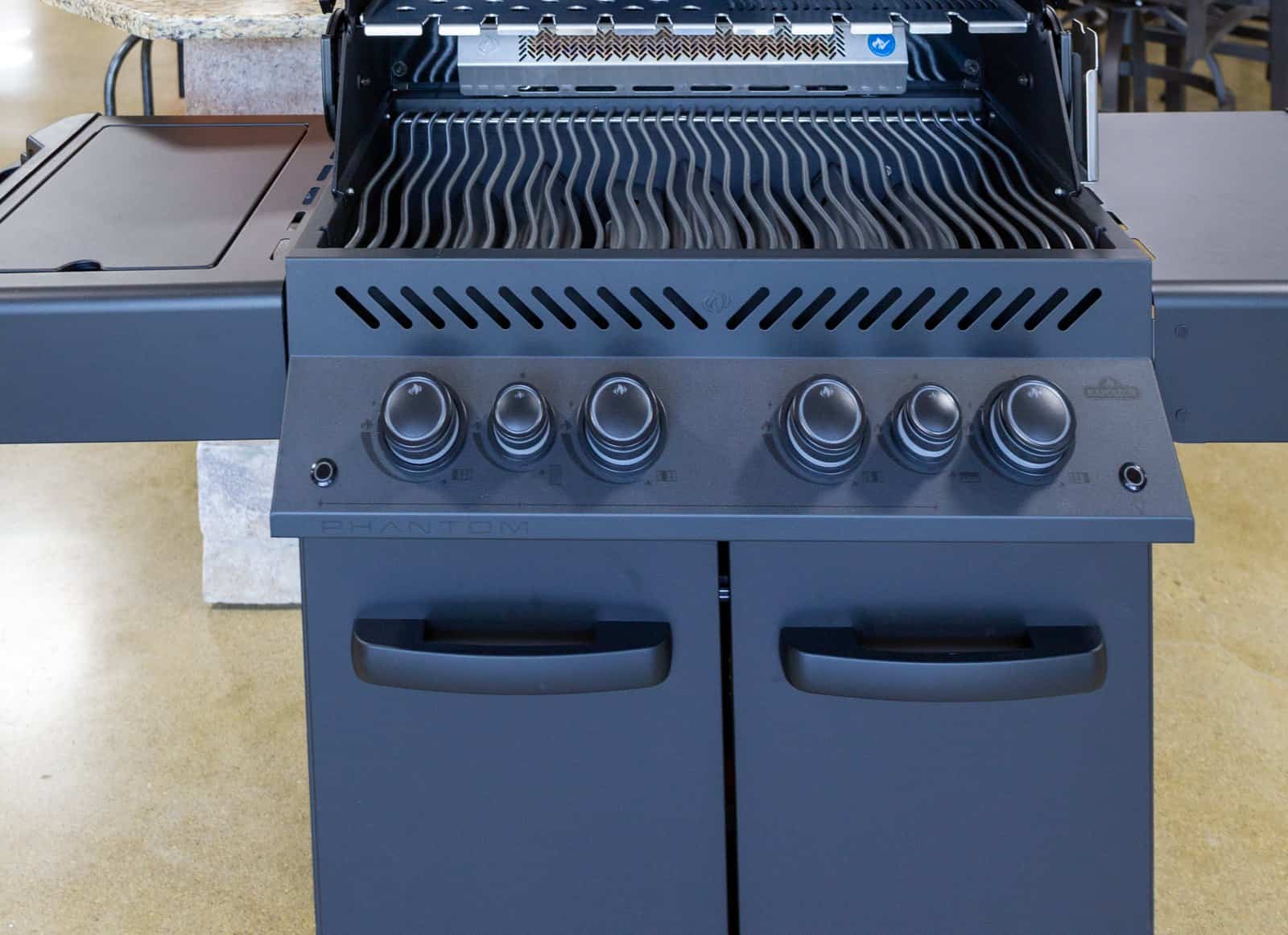
The gas grills on our floor are Napoleon and Fire Magic, and the reason comes down to what wears out. A cheap gas grill fails at the burners, the igniter and the lid. Thin stamped-steel burners rust through from the inside in a few humid Ohio summers. A thin sheet-metal lid loses heat every time the wind picks up, which on a hillside lot in Anderson Township or Fort Thomas is most evenings.
Heavy cast-iron or thick stainless grates matter more than people expect. They hold heat, so the grill recovers quickly when you put a cold tray of chicken on it, and they leave real sear marks instead of steaming the meat. When you are comparing two gas grills, lift a grate out of each. The heavier one is usually the better grill.
When is charcoal worth the extra effort?
Charcoal is worth it when cooking is the point of the afternoon. It sears hotter than most gas grills, adds a smoke flavor gas cannot, and a kettle or kamado can smoke for hours with the vents set right. The cost is time: twenty to thirty minutes to light, plus ash to clean out and fuel to keep dry.
Charcoal cooks ask about airflow and vent control rather than burner count, and we can usually spot them in the first minute. If that is you, the two shapes that matter are the kettle and the ceramic kamado. A kettle is light, cheap to feed and easy to learn. A kamado is a thick ceramic egg that holds heat and moisture so well it will run low and slow through a cold November evening on one load of lump charcoal. It is also heavy enough that where it lives is a permanent decision.
One local note on ceramic. A kamado left uncovered through a Cincinnati winter, with water settling into the gasket and the lid band, can crack from freeze-thaw the same way a clay chiminea does. Cover it, keep the vents closed when it is not in use, and it will last decades. We covered the same freeze-thaw problem for fire features in our post on fire pits, fireplaces and chimineas.
Gas vs pellet grill: what does a pellet grill do differently?
A pellet grill feeds compressed hardwood pellets from a hopper into a small fire pot with an electric auger, and a controller holds whatever temperature you set. It is really a wood-fired convection oven. It excels at ribs, brisket and anything cooked low for hours, and it is weaker at the high, direct heat a steak wants.
The gas vs pellet grill question comes up more every year, and the honest answer is that they are not competing for the same job. Gas is a stovetop outdoors. A pellet grill is a smoker that a beginner can run, because the controller does the fire management that a charcoal smoker makes you learn. Set it to 225, put a pork shoulder on at seven in the morning, and go to the Bengals game.
Three things to know before you buy one. It needs a grounded outlet, so plan for a weatherproof receptacle where it will sit. Pellets absorb moisture, and a hopper of damp pellets in our August humidity turns to paste and jams the auger, so store them sealed indoors. And most pellet grills cannot sear as hot as a good gas or charcoal grill, which is why many owners keep a second grill for steaks. Our floor leans toward gas and charcoal, so call ahead if you want to see a specific smoker or specialty grill.
| Type | Ready to cook | Best at | Weak at | Fuel and utilities | Cincinnati winter |
|---|---|---|---|---|---|
| Gas | About 10 minutes | Weeknight cooking, control, easy cleanup | Adds no flavor of its own | Propane tank or natural gas line | Works fine, sheltered from wind; propane flows slower in deep cold |
| Charcoal kettle | 20 to 30 minutes | Searing, smoke flavor, low cost to buy | Time, ash, temperature swings | Briquettes or lump, stored dry | Works; burns more fuel in cold wind |
| Kamado | 20 to 40 minutes | Holding low heat for hours, moisture, pizza | Weight, slow to cool, learning curve | Lump charcoal | Excellent, but cover it against freeze-thaw |
| Pellet | 10 to 15 minutes | Set-and-forget smoking, big cooks | High-heat searing | Hardwood pellets plus a grounded outlet | Works; insulate or blanket it, keep pellets dry |
How big a grill do you really need?
Size by the number of people you feed on a normal weekend, not by the once-a-year party. Cooking area in square inches matters more than burner count. A family of four does well on a mid-size grill; a household that hosts every weekend wants the next size up plus a side burner. Oversizing wastes fuel heating grates you never use.
Burner count is the number on the sign, and it is the least useful one. Two well-built burners under heavy grates will outcook five thin ones. Look at the primary cooking area, then ask whether the grill has real zones, a hot side for searing and a cooler side for finishing, which any grill with two independent burners can do. A rear rotisserie burner is a nice add if you actually roast chickens, and dead weight if you do not.
Measure where the grill will live before you fall in love with one on the floor. On the older decks and narrow side patios common in Hyde Park, Northside or Covington, a wide cart with two fold-down shelves may not leave room to walk past it while the lid is up.
What separates a grill that lasts from one that rusts out?
Materials. Stainless steel burners and firebox, a cast-aluminum or double-walled lid, and cast-iron or thick stainless grates survive Ohio humidity. Painted thin steel does not; it rusts through from the inside within a few seasons. Add a fitted cover and a spot out of the prevailing wind and a well-built grill will outlast two or three cheap ones.
Humidity is the quiet killer of grills here. Our summers run damp, the grill sits out through spring rain and fall leaf drop, and everything that is not stainless or cast aluminum starts to oxidize. Ask what the burners are made of, then what the firebox is made of, because a stainless burner inside a painted steel box still ends up in a rusty tub. Grade matters too; the good grills use 304 stainless where it gets wet and hot.
Then there is the lid. Lift it and let it drop the last inch. A heavy lid with a solid hinge holds temperature when a wind comes over the ridge, and it is the single clearest tell of build quality on the floor. Keeping any grill alive is mostly about cleaning it and covering it, and our grill maintenance guide walks through the routine for gas and charcoal.
Natural gas or propane: which hookup makes sense here?
If the grill will live in one spot and your home already has natural gas service, a natural gas grill on a dedicated line never runs out mid-cook and costs less to run. It needs a licensed plumber, a shutoff at the grill and usually a permit. Propane keeps the grill portable and needs nothing but a tank exchange.
Most homes inside the I-275 loop have natural gas at the house, and running a line to the patio is a routine job for a plumber. The catch is that a natural gas grill and a propane grill are different products with different orifices and regulators. Some models convert with a kit and some do not, so decide on the fuel before you buy, not after. Whichever you choose, keep the grill clear of siding, railings and the underside of a deck roof, and check whether your city, village or township has its own rule on grills near a structure.
Should you go built-in and plan an outdoor kitchen?
Go built-in when you are already building or redoing the patio, the grill has a permanent home with gas and power, and you cook outside most of the season. Stay freestanding when the space may change, you might move, or you want to roll the grill out of the wind. Built-in means the grill head, island and utilities are planned together.
An outdoor kitchen here has one design problem a magazine photo never shows: the ground moves. Our clay soil swells when wet and heaves when it freezes, and a stone island set on a thin patio slab will crack at the seams within a few winters. The island needs a proper base, and where it ties into masonry, footings below the frost line. It is the same lesson we apply to a paver deck around a pool, and it is why the best outdoor kitchens we see were planned with the patio rather than dropped onto an existing slab. Our outdoor kitchen guide covers layout and appliances, and the outdoor living page shows what goes around a built-in grill head.
If a pool is in the plan too, bring the grill into that conversation early. The gas line, the electrical run and the equipment pad all get trenched once, and our Cincinnati pool builders would much rather lay out a cooking area on the drawing than work around one later.
Can you grill through a Cincinnati winter?
Yes, and plenty of people here do. Gas and pellet grills work in the cold; they just take longer to heat and burn more fuel. Keep the grill out of the wind, keep the lid closed, and keep a spare propane tank, since a near-empty tank loses pressure fast in deep cold. Never grill in a garage or enclosed porch.
Wind is the real enemy in January, not the temperature. A grill on an exposed deck facing the river valley will struggle to hold heat on a day a sheltered one on the lee side of the house manages fine. We wrote up the routine years ago in grilling in winter, and it has not changed: preheat longer, open the lid less, and clear the snow off the cover before you pull it, or it all ends up in the firebox.
See them side by side on Reading Road
Everything in this post is easier to judge with your hands than with a spec sheet, which is why the grills sit on the floor next to the patio furniture and fire tables at 10731 Reading Road in Evendale, and the store carries the covers and tools that keep one working. Describe how you cook and we will point you at the right two or three. For a specific model or a full outdoor kitchen, contact us for a quote.
Frequently asked questions
Gas produces fewer of the compounds formed when fat drips onto burning coals, so it has a slight edge on that measure. In practice the bigger factors are how you cook: trimming fat, avoiding flare-ups, and not charring the meat matter more than the fuel. Both grills cook healthy food when you manage the fire.
It needs electricity, so it is tied to an outlet. It cannot sear as hot as a good gas or charcoal grill. Pellets must be kept dry, because damp pellets jam the auger, and the controller, auger motor and fan are parts that can fail. It also uses fuel steadily the whole time it is on.
Charcoal adds a smoke flavor that gas does not, and lump charcoal or wood chunks add more. Gas heat is clean and neutral, so the flavor comes from the meat, the seasoning and a proper sear on hot grates. Many experienced cooks own one of each and pick by the meal.
Yes. A gas grill works in freezing weather; it simply takes longer to preheat and uses more fuel. Set it out of the wind, keep the lid closed as much as you can, and keep a full spare propane tank, since a nearly empty tank loses pressure quickly in deep cold. Never grill in a garage or an enclosed porch.
Built-in makes sense when the patio is being built or redone, the grill has a permanent spot with gas and power, and you cook outside most of the season. Freestanding suits anyone who may move, rearrange the space, or wants to roll the grill out of the wind. In our clay soil, a built-in island also needs a proper base.