




We Speak Pool and Spa.
We Got You.
Pool Heater Options for Cincinnati: Gas vs Heat Pump vs Solar
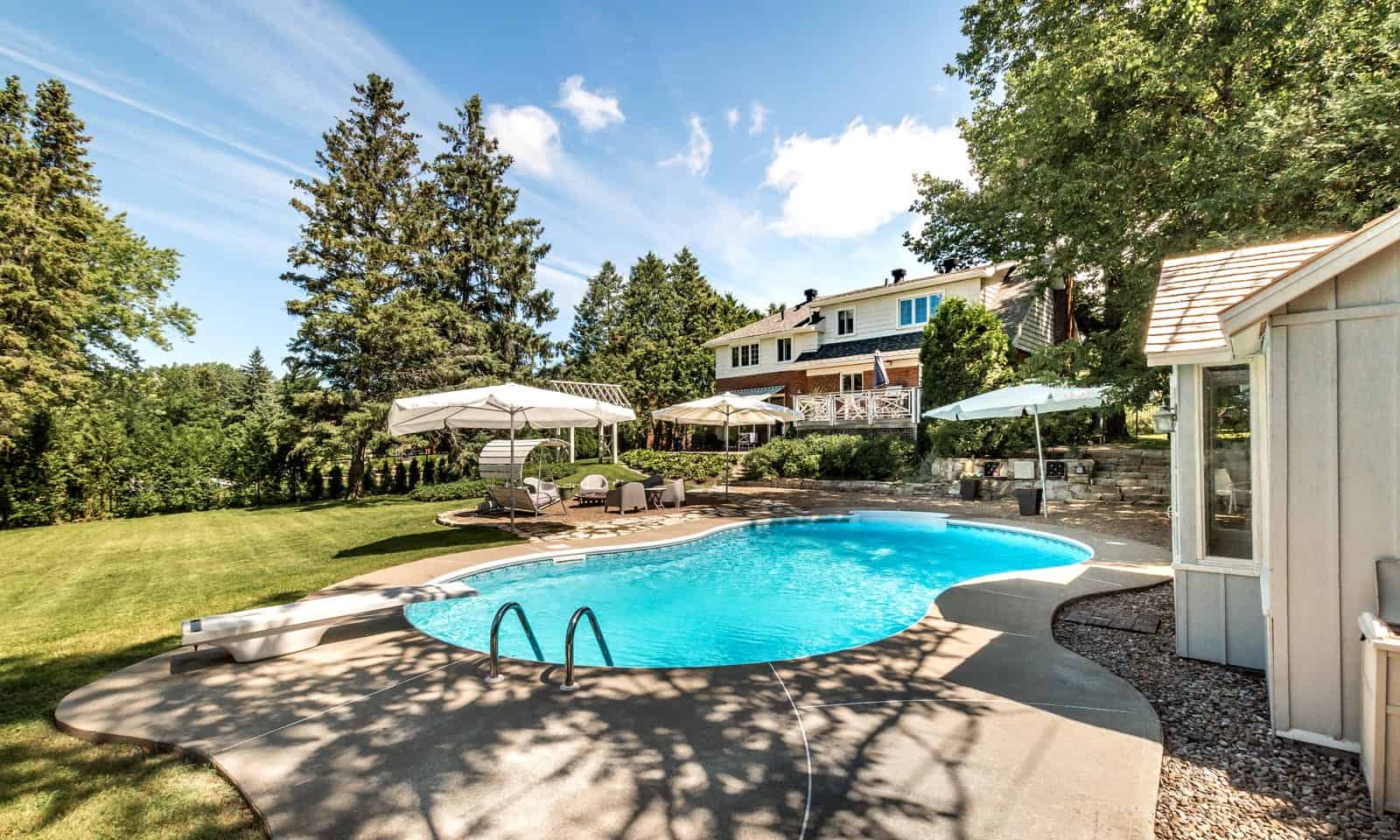
Every year around the third week of September, the same thing happens across Greater Cincinnati. The afternoons are still warm enough to swim and the kids are still willing, but the water has quietly slipped into the low 70s because the nights dropped into the 50s. The pool is open and nobody is in it. That gap between a pool that is open and a pool that is comfortable is what a heater closes.
We have been building and caring for backyard pools here since 1966, and the heat pump vs gas pool heater question comes up in nearly every design conversation, with solar close behind it. All three work. They work differently enough that the wrong one for your household will disappoint you, so this is how we sort it out with customers at our Reading Road store.
The short version
- A gas heater is the fast one. It can lift a typical inground pool about two degrees an hour in any weather, which suits weekend swimmers, attached spas and the cold ends of the season.
- A heat pump is the efficient one. It moves heat out of the air instead of making it, so it uses far less energy across a summer, but its output fades as the air drops toward 50 degrees.
- Solar works in Ohio as a helper. On an unshaded south-facing roof it adds free heat from May through September. It cannot heat on demand or beat a cloudy week.
- Size by the math: one BTU warms a pound of water one degree, so a 20,000-gallon pool needs about 166,800 BTU for every degree you add.
- Whatever you choose, a cover matters as much as the heater, and every heater has to be drained properly at closing or a Cincinnati freeze will split it.
How much longer can a heater stretch a Cincinnati pool season?
Unheated, most pools here are comfortable from about Memorial Day to Labor Day. With a heater and a cover, owners commonly swim from late April or early May into the middle of October. Gas reaches furthest into the cold ends of that window. A heat pump covers most of it, because it needs mild air to pull heat from.
Pool water follows the overnight low far more than the afternoon high. A clear, still September night pulls heat off the surface for ten hours straight, and one sunny afternoon does not put it back. That is why a pool can read 84 on Labor Day and 71 two weeks later without a single cold day in between.
Yards matter too. The mature oaks and maples that make neighborhoods like Wyoming, Hyde Park and Fort Thomas so pretty also keep pools in shade half the day, and a shaded pool runs several degrees behind a pool on an open lot in Mason or Union all season. For those owners a heater is less about October and more about making June mornings swimmable.
Think of it this way. You own the pool twelve months a year and you maintain it for about five. A heater is the one piece of equipment that changes how many of those months you actually use it.
How does a gas pool heater work, and when is it the right call?
A gas heater burns natural gas or propane and passes pool water through a heat exchanger above the flame. Residential units run from about 150,000 to 400,000 BTU per hour, enough to raise a typical pool about two degrees an hour in any air temperature. It suits occasional swimmers, attached spas and early or late season use.
Gas is heat on demand. You can turn it on Friday morning for a Saturday party, and it does not care whether the air is 45 degrees or 85. Nothing else on this list can say that, which is why gas is still the standard answer for anyone who heats a pool a few times a month instead of all season.
The trade is fuel. A gas heater burns the whole time it runs. Standard units turn a little over 80 percent of that fuel into warm water and the better ones reach the mid 90s, but either way it is the most expensive of the three to run if you try to hold 84 degrees from May to October.
Supply is the part people overlook. Most of Hamilton County and the Northern Kentucky river cities have natural gas at the street. Plenty of lots in outer Clermont, Warren and Boone County do not, which means a propane tank and a different set of numbers. And a 400,000 BTU pool heater can ask for more gas than your furnace, water heater and range put together, so the meter and the length of the run have to be checked before anyone orders equipment.
One more habit protects a gas heater: keep your water balanced. Low pH dissolves the copper in a heat exchanger, and we see that damage far more often than a burner failure. Our guide on how often to test and balance pool water covers the routine.
How does a pool heat pump work, and where does it struggle here?
A pool heat pump uses a compressor and refrigerant to pull heat out of the outdoor air and move it into the water, like an air conditioner running in reverse. It delivers several units of heat for each unit of electricity it uses. Output drops as the air cools, and most units do very little below about 50 degrees.
Because a heat pump moves heat instead of making it, the efficiency numbers look almost unfair. The Department of Energy puts the typical range at three to seven units of heat out for every unit of electricity in. Our humid summers help, because damp air carries more heat for the unit to harvest.
Read the fine print on that rating, though. Heat pumps are tested in 80-degree air at 80 percent humidity. That is a July afternoon in Cincinnati. It is not a morning in early May or a night in the middle of October, and those are exactly the hours when you want the heat.
A heat pump is also slow by design. Think in degrees per day, not degrees per hour. It rewards the owner who sets it to 82 in May and leaves it alone, and it frustrates the owner who shuts it off all week and expects a warm pool by Saturday noon.
On the practical side, it needs a dedicated 240-volt circuit, commonly on a 40 to 60 amp breaker. In older Cincinnati homes that still have 100-amp service, that can mean a panel conversation with your electrician first. It also sounds like an air conditioner condenser, so it should sit with open airflow around it and away from a bedroom window or the neighbor’s patio.
Heat pump vs gas pool heater: which one fits the way you swim?
Choose a heat pump if you swim most days and want the water held at a steady temperature from May through September. Choose gas if you heat for weekends, parties or a spa, or if you want to swim in April and late October. Households that want both often pair a heat pump with a gas heater.
The useful question is not which technology is better. It is how your family uses the pool. The two complaints we hear most are mirror images of each other: the heat pump owner who wanted a warm pool by Saturday and did not get one, and the gas owner who held 86 degrees all summer and then opened the utility bill.
| Option | Heating speed | In cold air | Energy use | What it needs | Best fit |
|---|---|---|---|---|---|
| Gas heater | Fast, about two degrees an hour | Full output | Highest | Sized gas line or propane tank, exhaust clearance | Weekend use, spas, April and October swimming |
| Heat pump | Slow, degrees per day | Fades toward 50 degrees | Low | Dedicated 240-volt circuit, open airflow | Daily swimmers holding a steady temperature |
| Solar collectors | Slowest, sun dependent | Little to none | Almost none | Large unshaded south-facing roof or rack | Patient owners, above-ground pools, a helper for another heater |
If you recognize yourself in both columns, a hybrid setup is a real option. The heat pump carries the long middle of the season cheaply, and the gas heater handles the opening week, the cold snap and the night you want the spa hot in twenty minutes.
Does solar pool heating actually work in Ohio?
Yes, as a helper. Solar collectors are black panels that your pool pump pushes water through, and the Department of Energy suggests collector area equal to 50 to 100 percent of the pool’s surface. On an unshaded south-facing roof they add free heat from May to September. They cannot heat on demand or through a cloudy stretch.
Run that sizing on a common 16 by 32 foot pool. The surface is 512 square feet, so you are looking for 256 to 512 square feet of panel. That is an entire face of a garage roof, pointed south, with nothing shading it between ten and four. In a lot of established neighborhoods here, the trees settle the question before we get to the equipment.
Solar also made its reputation in Florida and Arizona. Our Aprils and Mays are cloudier, and a simple unglazed panel gives heat back to a cool, windy day almost as fast as it collects it. Your pump has to lift water to the roof as well, so it may need to run harder, and the panels have to be drained before the first freeze.
None of that makes solar a bad idea. It makes it a supporting player. Paired with a cover, it takes a real bite out of how long a gas heater or heat pump has to run. It is also a sensible, low-commitment choice for above ground pools, where a rack or ground-mounted solar mat can add welcome degrees without new gas or electrical work.
What size pool heater do you need?
Start with the water. One BTU raises one pound of water one degree, and a gallon weighs 8.34 pounds, so a 20,000-gallon pool needs about 166,800 BTU per degree. A 400,000 BTU gas heater at 83 percent efficiency adds roughly two degrees an hour. A 120,000 BTU heat pump adds about 0.7 degrees an hour in ideal air.
To find your gallons, multiply length by width by average depth, then by 7.5. A 16 by 32 pool that averages five feet deep holds about 19,200 gallons. Knowing that number turns a sales conversation into arithmetic. A ten-degree rise on that pool is around five hours for the big gas heater and most of a day for the heat pump, before any losses.
Then account for the losses, because the surface is giving heat away the whole time the heater is adding it. Wind across an open lot is the worst of it. This is why surface area matters more than gallons when the job is holding a temperature, and why heat pumps should be sized for May and late September instead of July.
The common mistake is going small. An undersized heater never catches up on a breezy October day, so it runs constantly, wears out early and still leaves you with cool water. If you have an attached spa, size the gas heater for the spa. That same 400,000 BTU unit can take 500 gallons from 80 to 102 degrees in about twenty minutes.
What does it take to install a pool heater at your house?
A gas heater needs a properly sized gas line, a meter that can supply it, outdoor clearance for its exhaust, and a permit with a licensed gas fitter. A heat pump needs a dedicated 240-volt circuit, a licensed electrician, bonding and open airflow. Both are plumbed after the filter and ahead of any chlorinator or salt cell.
Start by looking at your equipment pad. Many older pads were poured for a pump and a filter and nothing else, so a heater can mean extending the pad. On the sloped lots that are so common on both sides of the river, that sometimes means a little retaining work too.
Permits vary by where you live. Hamilton, Butler, Warren and Clermont counties and the Northern Kentucky cities each handle gas and electrical permits their own way, which we covered in our post on inground pool permits and setback rules in Cincinnati. Neither job is a do-it-yourself project. Gas piping and pool bonding are the two places in a backyard where a shortcut can hurt someone.
If you are still planning the pool, decide on heat now. The easiest moment to run a gas line and electrical conduit is while the yard is already open. When we talk with families comparing Cincinnati pool builders or looking at inground vinyl liner pools, the heater is part of the equipment plan from the first sketch, even if it gets installed a season later.
Why does a pool cover matter as much as the heater you pick?
Because most pool heat leaves through the surface. Evaporation is the largest source of heat loss, and the Department of Energy credits a pool cover with cutting heating costs by 50 to 70 percent. A heater without a cover reheats the same water every night. A solar blanket or automatic cover keeps the heat you already paid for.
The clear fall nights that make for good sleeping are the ones that strip a pool fastest. Pull a solar blanket over the water at dusk and most of that loss simply stops. Our older post on how solar covers save energy explains the mechanics, and an automatic cover on a new build does the same job with a key switch.
Your set point is the other lever. The Department of Energy estimates that each degree you raise the thermostat adds 10 to 30 percent to the energy used, depending on climate. Most families are happy between 80 and 84. Holding 88 for the one relative who likes bath water is a decision worth making on purpose.
How do you protect a pool heater through a Cincinnati winter?
Every heater has to be fully drained and blown out at closing. Water left inside a gas heater or heat pump heat exchanger freezes, expands and splits it, and the damage shows up as a leak the following May. Shut off the gas and the breaker, open the drain plugs, and keep mice out of the cabinet.
Our winters are hard on equipment because they do not stay frozen. The temperature crosses the freezing line dozens of times between December and March, and every crossing works on any water that was left behind. A heat exchanger is the most expensive part to lose that way, and the easiest to protect.
Mice are the other winter problem. A gas heater cabinet is dry and sheltered, and they will nest in it and chew the wiring. In spring, look for nests and for spider webs in the burner openings before the first firing.
This is one of the reasons a professional pool closing service in Cincinnati earns its keep on a heated pool. Blowing the lines and the heater out with enough air volume is the step that prevents the May surprise. If you are choosing a company, read what to ask before you book a pool closing, and if your cover is tired, our comparison of mesh and solid winter covers and our pool cover replacement page are the next stops.
Talk it through before you buy
A heater is a ten-year decision, and the right one depends on details a website cannot see: your shade, your gas meter, your electrical panel, and how your family really swims. Bring your pool dimensions and a few photos of the equipment pad to the Reading Road store, or reach out to our pool service team, and we will walk through it with you. While you are here, we will test your water for free, and the pool supply shop has what you need to keep it balanced.
We will also be honest if a heater is the wrong tool. If what you really want is warm water in January, that is a hot tub, not a pool heater. For pricing on any equipment or on a new pool, contact us for a quote.
Frequently Asked Questions
For most families who use their pool regularly, yes. Unheated water here is comfortable for roughly three months. A heater and a cover commonly stretch that to five or more and make cool June mornings and late summer evenings swimmable. If the pool only gets used on the hottest days of July, a solar blanket alone may be enough.
It depends on the heater and the pool. A 400,000 BTU gas heater raises a 20,000 gallon pool about two degrees an hour, so a ten degree rise takes roughly five hours plus losses. A 120,000 BTU heat pump adds under a degree an hour in warm air, so plan on a day or more and keep the pool covered.
Only on mild days. A heat pump pulls its heat from the outdoor air, and most units lose nearly all of their output once the air falls below about 50 degrees. April mornings and late October nights in Greater Cincinnati are often colder than that. For swimming at the far ends of the season, gas is the dependable choice.
Yes. The heater is plumbed into the return line after the filter, so it can be added to almost any pool. The real questions are whether the equipment pad has room, whether your gas meter and line or your electrical panel can supply it, and what your city or township requires for permits. A site visit answers all of them.
Yes, and it is the most common cause of early failure we see. Low pH and low alkalinity make water corrosive, and it slowly dissolves the copper in a heat exchanger. High calcium leaves scale inside it that blocks flow and causes overheating. Test weekly, keep pH between 7.4 and 7.6, and install any chlorinator after the heater.