



We Speak Pool and Spa.
We Got You.
How Long Does an Inground Pool Take to Build in Cincinnati?
Every June the phone rings with some version of the same question. A family has decided they want a pool, they would like to be swimming before the Fourth, and they want to know what it takes to make that happen. The honest answer is usually that the timeline was settled months before they picked up the phone.
We have been building and servicing pools in Greater Cincinnati since 1966, and the biggest gap between what homeowners expect and what actually happens is not design and it is not the shape of the deck. It is time. So here is the real schedule, phase by phase, including the parts that no builder in this region controls.
Key takeaways
- Active construction on a typical inground pool in Greater Cincinnati runs roughly six to twelve weeks, measured from the first day of excavation to the day the water is balanced and the equipment is running.
- The full project, from signed contract to swimming, usually spans four to eight months, because design, permitting, and scheduling all happen before any equipment reaches your driveway.
- Vinyl liner pools finish fastest, fiberglass is close behind once the shell arrives on site, and gunite takes the longest because concrete has to cure on its own schedule.
- Rain and our regional clay soil are the two most common causes of delay here. A wet spring can move an excavation date by weeks, and no crew can dig that decision away.
- Families who sign in fall or winter are the ones who reliably swim by Memorial Day. Homeowners who start shopping in May are usually building for the following season.
How long does an inground pool take to build in Cincinnati?
Plan on six to twelve weeks of active construction once excavation begins, and four to eight months from the day you sign. Vinyl liner pools land at the short end of that range and gunite at the long end. Permitting, weather, and how easily equipment reaches your yard move the number more than the pool design itself does.
There are really two clocks running on a pool project, and confusing them is where most of the frustration comes from. The first clock is construction: the stretch of working days when there are trucks and crews in your yard. That clock is fairly predictable. The second clock starts the moment you sign and includes everything that has to be arranged before a single shovel moves. That second clock is the long one, and it is the one homeowners almost never account for.
A pool that takes eight weeks to build can still take seven months to deliver. Nothing has gone wrong in that scenario. It simply means the permit review, the utility locate, the equipment order, and the crew’s existing schedule all had to line up first. When somebody tells you a pool goes in “in about a month,” they are describing the construction clock and quietly leaving out the rest.
What has to happen before anyone digs?
Before excavation you need a finished design, a site survey, an approved building permit from your local jurisdiction, an underground utility locate, and in many neighborhoods an HOA sign off. In Greater Cincinnati this pre construction stage commonly runs two to four months depending on which county reviews your plans.
Design comes first, and it takes longer than people expect because it is where the real decisions live. Where the pool sits relative to the house, how the deck flows, where the equipment pad goes, how you will get a mower into the back corner afterward. Changing any of that on paper costs a conversation. Changing it after the steel is set costs considerably more than a conversation.
Then comes permitting, and this is where the regional picture gets complicated. Our service area crosses a lot of jurisdictional lines. Hamilton, Butler, Clermont, and Warren counties on the Ohio side, plus Boone, Kenton, and Campbell across the river in Northern Kentucky, and inside those counties every municipality has its own review desk and its own queue. Two families three miles apart can wait very different amounts of time for the same approval. Setback rules, fence and barrier requirements, and how close you can build to a septic field or an easement all get decided here. We wrote up how those rules actually work in our guide to inground pool permits and setback rules in Cincinnati.
The utility locate is the last gate and the one nobody should ever rush. Before digging, underground lines have to be marked, and if a gas line or a service lateral runs where the deep end was drawn, the design changes. That is a good outcome. Finding it with a bucket instead of a flag is the bad one.
How long do excavation and the pool shell take?
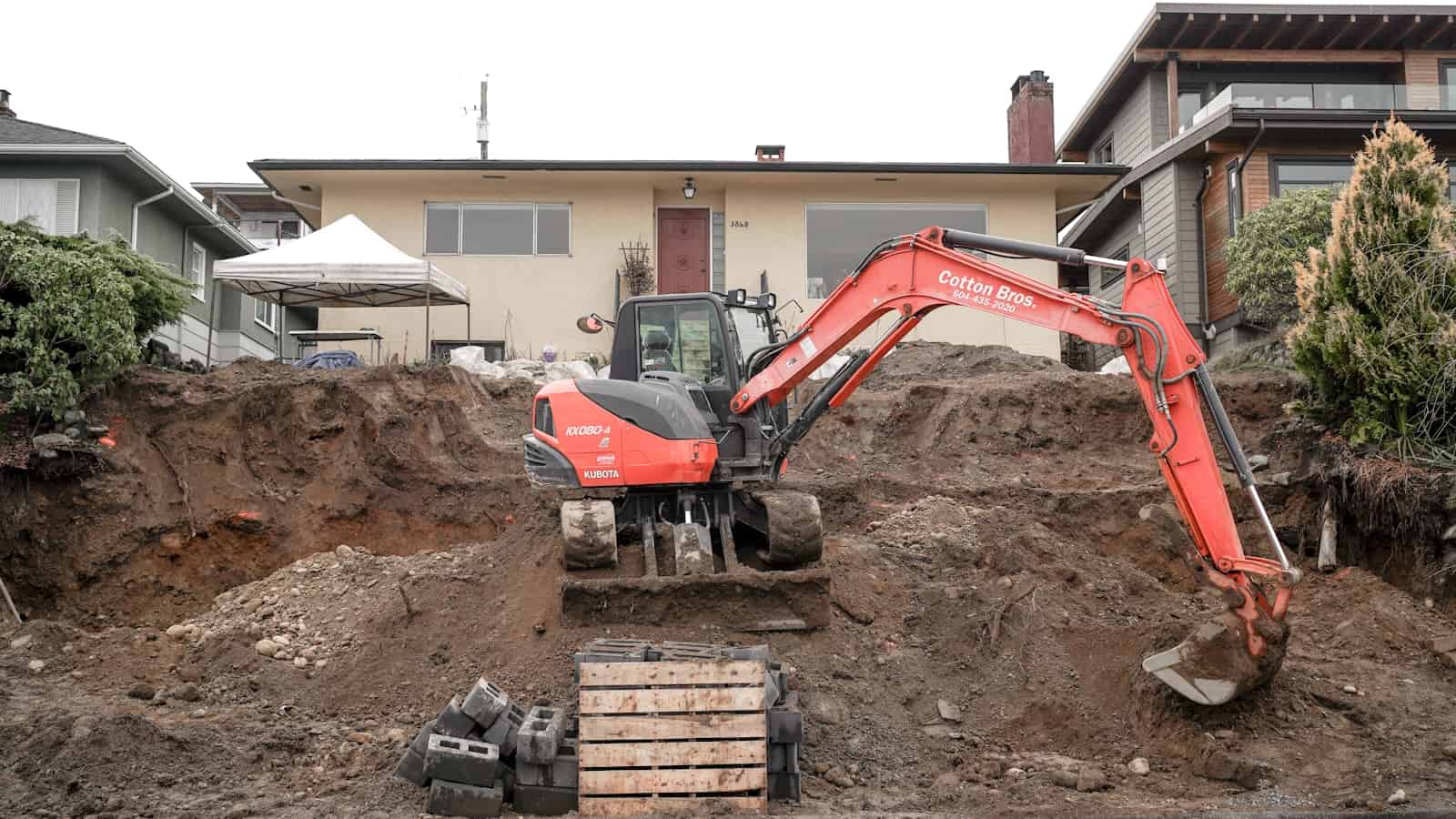
Excavation itself is usually one to three days. Setting the wall structure, running plumbing, and bonding the electrical typically adds one to two weeks, with municipal inspections between stages. The dig is the most dramatic part of the job to watch and one of the shortest parts of the schedule.
Homeowners tend to get excited on dig day, and understandably so. A yard becomes a pool shaped hole in a morning. What follows is slower and far less photogenic. Walls or forms go up, the floor gets shaped, plumbing lines are run and pressure tested, and the structure is electrically bonded so every piece of metal in and around the pool sits at the same electrical potential. That bonding step is a safety requirement, not a formality, and an inspector will look closely at it.
Inspections are the hidden variable in this stage. Work stops until the inspector arrives, and the inspector arrives when the schedule allows. A crew can be ready on a Tuesday and waiting until Friday. Multiply that by the two or three inspection points on a typical build and you can see how a two week phase quietly becomes three.
Why does a gunite pool take longer than a vinyl liner pool?
Gunite takes longest because concrete has to cure before tile, coping, and the interior finish can go on, and that curing period cannot be shortened by adding crew. Vinyl liner pools finish fastest since the wall panels and liner install directly. Fiberglass is quick on site but depends on when the manufactured shell is delivered.
This is the single largest schedule lever you control, and it is worth understanding before you fall in love with a finish. A vinyl liner pool arrives as engineered components. Once the walls are set and the base is prepared, the liner goes in and the pool is ready for water in a comparatively short window. That is why vinyl remains popular across this region for families working toward a specific season.
Fiberglass is interesting because the on site work is fast, sometimes remarkably so, but the shell is manufactured elsewhere and trucked in. Your timeline is tied to a production and delivery calendar rather than to your yard. When the shell is available, fiberglass moves quickly. When it is backordered, nothing on your property changes that.
Gunite is the long road and, for a lot of homeowners, worth it. The shell is sprayed, then it cures, then tile and coping go on, then the interior finish. Curing is chemistry, not labor. You cannot staff your way through it. If you want a fully custom shape with features that only concrete can deliver, budget the extra weeks up front rather than being surprised by them in month three. We compared all three side by side in our breakdown of fiberglass, vinyl liner, and gunite pools for Ohio winters.
What actually delays a pool build in Greater Cincinnati?
Rain is the leading cause of delay in this region, followed by our heavy clay soil, sloped or hard to access lots, permit and inspection backlogs, and surprises found underground. Most of these are regional and seasonal rather than a reflection of the builder, which is why honest schedules here are given as ranges.
Rain does not just stop work on the day it falls. Clay holds water, and a saturated excavation has to dry before heavy equipment can safely work in it again. A serious wet stretch in March or April can push a dig date well past the rain itself. This is the most common reason a spring project slips, and it is completely outside anyone’s control.
Our soil deserves its own mention. Much of the area sits on dense clay that moves with moisture, and plenty of older neighborhoods here were built on grades that were never meant to hold a level rectangle. Sloped lots often need retaining walls or additional structural work, which adds engineering and build time. That is not a problem to avoid so much as one to plan for, and it is a big part of why choosing a pool builder who actually knows this terrain matters more here than it might somewhere flat and sandy.
Then there is the freeze thaw calendar. Concrete and certain finish work want temperatures above a workable threshold, and our shoulder seasons are unpredictable. A build that is comfortably on schedule in October can hit a cold snap that closes the window on finish work until spring. Experienced local crews watch that calendar constantly and sequence the weather sensitive steps first.
When should you sign if you want to swim by Memorial Day?
Sign in the fall or winter for a realistic shot at swimming by Memorial Day. Design and permitting can move through the slow season, which puts your project near the front of the spring construction queue. Contracts signed in April or May are generally building toward late summer or the following season.
This is the most useful thing in this article, so it is worth stating plainly. The families who swim on Memorial Day weekend are almost always the ones who signed the previous autumn. Fall and winter are when permit desks are quieter, when design has room to breathe, and when the construction calendar still has open slots. By the time the first warm Saturday arrives and everyone decides at once that this is the year, that calendar is largely spoken for.
There is no penalty for planning in the cold. Nothing about a January contract makes the pool worse. It simply moves you ahead of the crowd that has not started yet. We laid out the seasonal reasoning in more detail in our guide to the best time of year to build an inground pool in Cincinnati, and you can start a conversation any time through our inground pool page.
What happens after the pool is filled?
After filling, the water needs a startup balance, the equipment is commissioned, and you get walked through running the system. Expect a short break in period while the chemistry settles, especially on a new plaster finish. Your first opening and closing then set the rhythm for every season after that.
The build ending is not the project ending. A brand new pool needs its water brought into balance, and a fresh plaster interior in particular goes through a break in period where the chemistry needs closer attention than it ever will again. This is where a local store you can walk into with a water sample earns its keep. We test water in house, and getting a new owner through that first month confidently is a lot of what we do all summer.
Then the seasonal rhythm begins. In this climate that means a real opening in spring and a real closing in fall, because our winters are not gentle and freeze damage to plumbing is expensive and entirely preventable. Some owners handle it themselves after a season or two of learning the routine. Others hand it off permanently. Either is fine, and you can see what the professional version includes on our pool opening and closing page or through our broader pool services. Chemicals, test kits, covers, and everything else you will want on hand are in our online store.
If you want the wider view of the whole experience rather than just the calendar, our overview of what to expect from a new pool installation in Cincinnati covers the design and ownership side in more depth. And if you are ready to talk about your own yard, reach out through the pools page and we will give you an honest read on timing before anything else.
Frequently asked questions
Sometimes, but it depends heavily on when you sign and what you build. A vinyl liner pool contracted in late winter can realistically be finished for the same summer. A contract signed in May is usually building toward late summer at the earliest, and often toward the following season once permitting and the construction queue are accounted for.
Not entirely. Excavation and structural work often continue through cold months as long as the ground is workable, and design and permitting move freely all winter. What does stop is temperature sensitive finish work such as concrete decking and certain interior finishes, so builders sequence those steps around the weather.
That depends on the interior finish. Vinyl liner and fiberglass pools are generally swimmable within a few days once the water is circulating and balanced. A new plaster or gunite finish goes through a longer break in period where the chemistry needs close attention before normal use, and your builder will walk you through it.
Yes. Every jurisdiction in Greater Cincinnati and Northern Kentucky requires a permit for an inground pool, along with a code compliant safety barrier. Setback distances, fence specifications, and review timelines vary by county and by municipality, so the answer for your address may differ from your neighbor’s in the next town.
Vinyl liner pools are typically the quickest to complete because the wall structure and liner install directly with no curing period. Fiberglass can be very fast on site but is tied to when the manufactured shell is delivered. Gunite takes the longest because the concrete shell must cure before tile, coping, and the interior finish can be applied.