




We Speak Pool and Spa.
We Got You.
Above Ground Pool Maintenance: A Cincinnati Owner’s Checklist
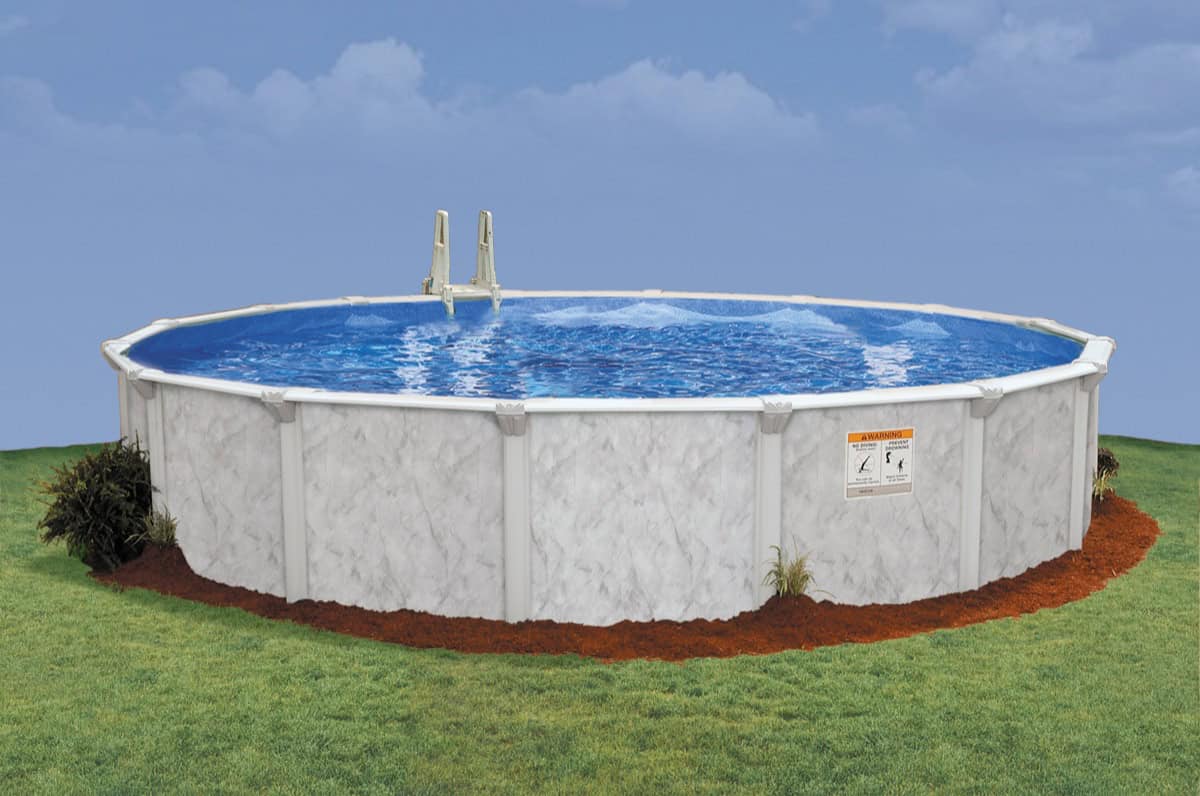
Most above ground pools that wear out early do not die from the water. They die from the ground under them and the hardware around them: a washout under the bottom track after a July thunderstorm, a rusted upright nobody looked at for three seasons, a skimmer that ran dry and cooked a pump. Water chemistry gets all the attention, and it matters, but on an above ground pool it is only half the job.
We sell, deliver and install above ground pools in Cincinnati and Northern Kentucky, and we have been answering pool care questions at our Reading Road counter since 1966. This above ground pool maintenance checklist is the one we would hand a new owner: what to do every week, every month and every season, what changes when a pool sits on the ground instead of in it, and the few jobs worth calling us for.
The short version
- Above ground pool maintenance is two jobs: keeping the water balanced and keeping the structure sound. The structure half, meaning the base, wall, frame, liner and hoses, is the part most pool care guides leave out.
- In swim season, test free chlorine and pH twice a week, run a full test weekly, brush the walls and floor weekly, and empty the skimmer and pump baskets whenever they hold debris.
- A smaller pool swings faster. One heavy rain or one hot, crowded weekend moves the numbers in an above ground pool further than in a big inground pool, so dose in steps and retest.
- Once a month, walk the outside of the pool and look for soil washing out under the bottom track, rust on uprights and top rail screws, a bulge in the wall, and drips at the hose fittings.
- Keep the pool full and covered all winter. Draining an above ground pool for the season is what damages it.
What does above ground pool maintenance actually involve?
Above ground pool maintenance covers the water and the structure. The water side is testing, balancing, sanitizing, skimming, brushing and filter care. The structure side is the level base, the wall, the uprights and top rail, the liner, and the hoses and fittings between the pool and the pump. Most owners handle both themselves.
An inground pool owner can mostly forget about the shell, because the ground holds it. An above ground pool is a freestanding structure. A thin steel or resin wall is held round by a bottom track, uprights and a top rail, the liner hangs inside it, and the full weight of the water pushes outward on all of it, all day, every day. That design is why these pools go up quickly and cost a fraction of an inground build. It is also why the outside of the pool deserves as much of your attention as the inside.
The water side will feel familiar to anyone who has owned a pool. The difference is volume. An above ground pool holds far less water than most inground pools, so the same summer storm, the same Saturday with a dozen kids in it, or the same week of 90 degree sun moves the numbers further and faster. Small, regular attention beats big corrections every time.
What goes on the weekly above ground pool maintenance checklist?
In swim season, test free chlorine and pH twice a week and run a full test weekly. Skim the surface, empty the skimmer and pump baskets, brush the walls and floor, vacuum or run a cleaner, check the water level at the skimmer, and read the filter pressure gauge. The table below adds the monthly and winter checks.
| Task | How often | Why it matters on an above ground pool |
|---|---|---|
| Test free chlorine and pH | Twice a week in season | A smaller volume drifts faster after rain, heat and heavy use |
| Full water test | Weekly | Catches alkalinity and stabilizer creep before it turns into a cloudy weekend |
| Skim, empty skimmer and pump baskets | As needed, often daily in May and October | Cottonwood fluff and maple seeds in spring and leaves in fall starve the pump |
| Brush walls, floor and cove | Weekly | Algae grips vinyl first in the corners and along the cove where wall meets floor |
| Check the water level | Weekly and after every storm | Too low and the skimmer pulls air; too high and it stops skimming |
| Read the filter pressure gauge | Weekly | About 8 to 10 psi over the clean reading means it is time to backwash or clean |
| Walk the outside of the pool | Monthly | Base washouts, rust, wall bulges and fitting leaks show up outside first |
| Test cyanuric acid and calcium | Monthly | Stabilizer only climbs, and Cincinnati city water starts low on calcium |
| Check the winter cover | Every few weeks, November to March | Standing water and snow load stretch a cover and can pull it into the pool |
None of this takes long once it becomes a habit. Ten minutes twice a week and a longer session on the weekend covers a normal Cincinnati summer. The owners who struggle are almost never the ones who skipped a day. They are the ones who coasted from the Fourth of July to Labor Day and then tried to fix six weeks of drift in one afternoon.
How is above ground pool care different from inground pool care?
Three things change. The water volume is smaller, so chemistry swings faster. The wall, frame and base sit exposed to the weather and need regular inspection. And the plumbing is usually flexible hose running across the ground to a pump and filter, which means more connections that can loosen, crack or quietly leak.
Every above ground pool we sell has a vinyl liner, and vinyl sets the cleaning rules. Use a nylon brush, never a stainless steel one. Keep pH from sliding below 7.2, because low pH pulls at vinyl until it fades, stiffens and starts to wrinkle. Dissolve granular shock in a bucket of pool water before it goes in, so undissolved product never sits on the floor and bleaches a spot into the liner.
The ladder or step unit stands on the liner too. Check that its feet still have their pads and that it sits flat. A ladder that rocks a little every time someone climbs out will eventually wear through the floor under it.
Then there are the hoses. Most above ground setups run flexible hose from the skimmer and the return fitting to a pump and filter sitting beside the pool. Hose clamps loosen as the hose heats and cools through the season, and a slow drip at a fitting is easy to miss until the grass under it never dries out. Run a hand along each connection when you read the filter gauge.
Which water numbers matter most in an above ground pool?
The same five as any pool: free chlorine 2 to 4 ppm, pH 7.4 to 7.6, total alkalinity 80 to 120 ppm, cyanuric acid 30 to 50 ppm, and calcium hardness 200 to 400 ppm. On a smaller pool, correct alkalinity first, then pH, and add chemicals in partial doses with a retest in between.
Our pool water testing schedule walks through each number in detail. What changes on an above ground pool is how fast you get there. A full dose calculated for the wrong volume can overshoot pH or alkalinity in a single afternoon, so measure your pool’s real gallons once, write it down, and dose to it.
Local water matters too. Greater Cincinnati city water arrives with roughly 125 to 140 mg/L of calcium, below the 200 ppm floor a pool wants, so a fresh fill or a big top off usually needs calcium added rather than removed. Our guide to balancing calcium hardness in a Cincinnati pool covers the dosing. Heavy summer rain does the opposite of evaporation: it dilutes everything, so test the day after a big storm, not the week after.
If the numbers stop making sense, bring about a cup of pool water and a photo of the chemicals you already use to the store at 10731 Reading Road in Evendale. Water testing is free, we do it while you wait, and we will tell you exactly what your water needs from the pool supplies on our shelves, which is often less than people expect to buy.
What should you inspect on the frame, wall and base?
Once a month, walk the full circle of the pool. Look for soil washing out under the bottom track, water standing against the wall, rust on uprights, top rail screws and the wall itself, any bulge or lean in the wall, and drips at the skimmer, return and hose fittings. Catching these early is the cheapest repair there is.
Cincinnati clay is the reason this walk matters here more than in sandy country. Clay holds water for days after a storm, and a downspout or a sloped patio that sends roof water toward the pool can soften the ground under one section of the bottom track. That section settles, the wall goes out of round, and the liner takes the stress. If you see soil washing out or a puddle that sits against the wall, redirect the water first and ask us about the base second.
Keep mulch, soil and grass clippings from piling up against the bottom of the wall. A light landscape border is fine, but the base of a steel wall needs to dry out between rains. Resin uprights and top rails do not rust, which is one reason we steer many families toward resin or hybrid frames in our above ground pool buying guide. On a steel pool, a rust spot on an upright or the wall is worth a photo and a call. We are an authorized Doughboy and Embassy dealer and handle manufacturer warranty claims through the store, and the warranty on your exact model decides what happens next.
A wall that bulges, leans or creases is the one finding that should stop the season. Keep people out of the pool and call us. A wall under that kind of stress is not something to watch for another month.
How do you take care of the filter and pump?
Read the pressure gauge when the filter is clean and write that number down. When it climbs about 8 to 10 psi above it, backwash a sand filter or pull the cartridge and hose it off. Keep the pump level and dry, empty its basket often, and never let it run while the skimmer is pulling air.
The clean pressure reading is the most useful number on the whole system, and almost nobody writes it down. A reading that climbs much faster than usual tells you something changed in the water, often an algae bloom getting started.
Cartridge owners do well to keep a spare cartridge, so one can dry while the other works, and we stock replacement cartridges for the filters we sell. Set the pump on a firm, level pad above any spot where rain collects, and keep the water level in the middle of the skimmer opening. A skimmer that runs dry lets the pump suck air, and a pump that runs dry does not last. A robotic pool cleaner takes vacuuming off your list entirely, and we can tell you which of the Dolphin and Beatbot models we carry suits your pool.
What does above ground pool maintenance look like in fall and winter?
Close the pool before the first hard freeze, keep it full and covered all winter, and check the cover every few weeks. Pump rainwater and snowmelt off a solid cover, keep the air pillow under it inflated, and never drain an above ground pool for the season, because the water is what supports the wall.
If you are reading this in late fall with the pool still open, it is time. Our step by step guide to winterizing an above ground pool in Cincinnati covers the closing itself, and if you would rather hand it off, our crews do pool openings and closings across Greater Cincinnati and Northern Kentucky.
Winter maintenance is mostly the cover. Freeze thaw is hard on everything outdoors here, and a solid cover holding a few inches of rainwater in January is carrying real weight. Pump it off with a cover pump, keep the air pillow inflated so ice has somewhere to push, and look for tears before spring. Our comparison of mesh and solid winter pool covers explains the trade offs, and if yours is past saving, we handle pool cover replacement too. Open again in spring once nighttime temperatures stay consistently mild.
When should you call a pro instead of doing it yourself?
Most above ground pool maintenance is owner work, and we would rather teach it than sell it. Call a pro for a seasonal opening or closing, a liner that is leaking, torn or pulling off the wall, a wall that bulges or leans, rust that has gone through, or water loss you cannot trace with a bucket test.
We do not run a weekly cleaning route, and an above ground pool rarely needs one. What an owner cannot easily do alone is the big stuff: a liner swap, a base that needs releveling, a wall section that has failed. Our page on pool liner replacement and our guide to the signs a pool liner needs replacing will tell you whether you are close. For anything you are unsure about, request a quote or stop by the showroom with a few photos. And if you are pricing a new pool rather than nursing an old one, start with the above ground pools on our floor and build your pool package so the pool and every extra are quoted together.
Frequently asked questions
In swim season, skim the surface and empty the baskets whenever debris collects, brush the walls and floor once a week, and vacuum or run a cleaner weekly. Test free chlorine and pH twice a week. In spring seed season and fall leaf season, the baskets may need emptying every day.
Long enough to move the whole pool through the filter at least once a day, which for most above ground pools means running the pump most of the daylight hours in summer. Run it longer during heat waves, after a crowded weekend, and any time you are clearing cloudy or green water.
Yes. The chemistry is the same as any chlorine pool. The difference is the vinyl liner: dissolve granular shock in a bucket of pool water before adding it, never let undissolved product sit on the floor, and keep pH from sliding below 7.2, because low pH and concentrated chemicals both fade and weaken vinyl.
Summer evaporation and splash out account for most of it. To check for a leak, run a bucket test: set a bucket of pool water on the top step, mark both water levels, and compare after a day. If the pool drops faster than the bucket, check the skimmer and return gaskets, the hose clamps and any ground that stays wet.
No. An above ground pool is built to stay full through winter, because the water supports the wall and the liner. Lower it only to the level your closing method calls for, blow out and plug the lines, add winter chemicals, and cover it. A drained pool can shrink its liner and buckle its wall.