



We Speak Pool and Spa.
We Got You.
Fiberglass vs. Vinyl Liner vs. Gunite: Best Inground Pool for Ohio Winters
For six decades, Cincinnati families have walked into our showroom with the same question before they ever break ground: which kind of inground pool should we build? Since 1966 we have installed and serviced all three of the major inground pool types across Greater Cincinnati, and the honest answer is that the best one has less to do with the brochure and more to do with how a pool survives an Ohio winter. Our clay-heavy soil, our freeze-thaw cycle, and our hard water put stress on a pool that a builder in Florida or Arizona never has to think about. Here is how vinyl liner, fiberglass, and gunite pools really compare when the ground freezes.
The Three Ways to Build an Inground Pool
Almost every inground pool in the Cincinnati area is built one of three ways. Each has a different structure, a different surface, and a very different relationship with cold weather. Understanding those differences up front is the fastest way to narrow down what belongs in your backyard. If you want to see finished examples of all three, our inground pool page is the best place to start.
Vinyl Liner Pools
Vinyl liner pools have been the workhorse of Ohio backyards for generations, and for good reason. The structure is built from steel or polymer wall panels set on a poured footer, then finished with a custom-fit vinyl liner. That flexible wall system is one of the reasons vinyl performs so well in our climate: when the ground shifts with the freeze-thaw cycle, the walls give a little instead of fighting it. Vinyl also offers the widest range of shapes and sizes at the most approachable price point, which is why we install so many of them. The trade-off is the liner itself. It is a wear part, and in our region it typically needs replacing every 7 to 12 years. When that day comes, our liner replacement service makes it a straightforward refresh rather than a rebuild.
Fiberglass Pools
A fiberglass pool arrives as a single pre-molded shell that we lower into the excavation in one piece. Installation is dramatically faster than the other two types, often measured in days rather than weeks, because there is no wall to assemble or concrete to cure. The smooth gel-coat surface is the real selling point for busy families: it is non-porous, so it resists algae and needs fewer chemicals to stay balanced. Fiberglass shells routinely last 25 to 30 years with no liner to ever replace. The limitation is design freedom. Shells come only in the manufacturer’s shapes and sizes, and because they ship by road, they max out around 16 feet wide. If a factory shape fits your vision, fiberglass is one of the lowest-maintenance pools you can own in Cincinnati.
Gunite (Concrete) Pools
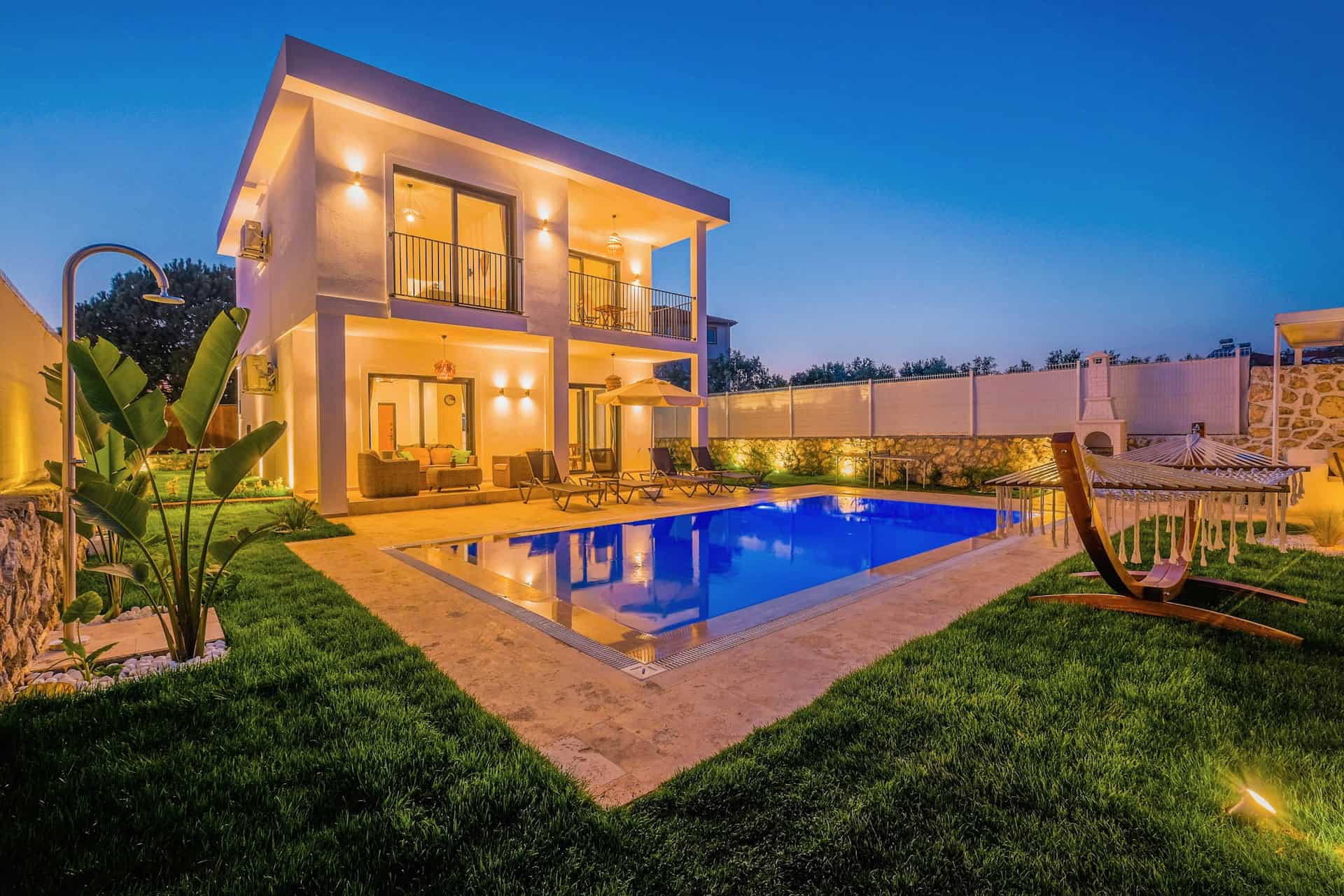
Gunite is the top of the market and the most customizable pool you can build. It is created by spraying a concrete-and-sand mixture over a steel rebar frame, then finishing it with plaster or an aggregate like pebble. Because it is formed in place, a gunite pool can be any shape, any depth, with vanishing edges, tanning ledges, and integrated spas. It is also the most durable structure of the three and can last 50 years or more. The trade-offs are real, though. Gunite has the longest build time, the highest maintenance and chemical demand, a harder surface underfoot, and it needs resurfacing every 10 to 15 years. It is also the most rigid of the three, which matters more than most homeowners realize once you understand what our winters do.
What Ohio’s Freeze-Thaw Cycle Actually Does to a Pool
The number one thing to understand about building a pool in Cincinnati is that the cold itself is rarely the villain. The damage comes from water. When water freezes it expands, and our region swings above and below freezing repeatedly all winter, so the ground around a pool heaves and settles again and again. That movement, plus hydrostatic pressure from groundwater pushing on the shell from outside, is what stresses an inground pool between November and March. This is exactly why flexible systems have an edge here. A vinyl liner pool’s panel walls and a fiberglass pool’s one-piece shell both absorb that ground movement instead of resisting it. Gunite, being rigid concrete, shows the stress soonest if it is neglected, which is why proper closing is non-negotiable on a concrete pool. The good news is that all three types last for decades in Ohio when they are winterized correctly: water dropped to the right level, lines blown out and plugged, and the right cover in place. Most of the winter failures we are called out to fix trace back to a pool that was closed wrong, not a pool that was built wrong.
Cincinnati’s Hard Water and Your Surface Choice
Greater Cincinnati sits on hard water, and that quietly influences which surface ages best. Plaster on a gunite pool is porous, so in a hard-water region it is more prone to scaling and staining and takes more chemistry to keep looking new. The gel-coat on fiberglass and the surface of a vinyl liner are both non-porous, which means they shrug off scaling far better and are easier to keep balanced week to week. If low upkeep is high on your list, that hard-water reality nudges the decision toward vinyl or fiberglass. Whichever you choose, our team can build a maintenance and water-balancing routine around it through our pool services.
Our Recommendation for Cincinnati Backyards
After nearly sixty years of building pools in this climate, here is where we land for most local homeowners. For the best overall value and the widest choice of shapes, vinyl liner is still hard to beat, and it handles our freeze-thaw ground beautifully. For the family that wants the lowest possible maintenance and a build that is done in days, fiberglass is the smart pick, provided a factory shape fits the yard. And for the homeowner chasing a fully custom, resort-style backyard with no limits on design, gunite is the dream build, as long as you commit to the maintenance and closing it demands. There is no wrong answer here, only the right match for your yard, your budget, and how you plan to use the pool.
When to Build and What It Costs
Because pool prices swing with size, features, site conditions, and materials, we never quote a real number sight unseen, and you should be skeptical of anyone who does. What we can tell you is that fall and winter are often the smartest time to commit. The ground can still be dug before a hard freeze, our calendar is far more open than the spring stampede, and your pool is finished and waiting the day the season opens. When you are ready to compare all three options for your specific backyard, reach out through our inground pools page and we will walk your yard, talk through the freeze-thaw considerations, and put together a real quote.
There is no single winner, but flexible-wall vinyl liner and one-piece fiberglass pools handle Ohio’s ground movement most gracefully because both flex slightly instead of resisting it. Gunite is the most durable structurally but the most rigid, so it depends most heavily on meticulous winterization. Any of the three will last for decades in Cincinnati if it is closed correctly every fall.
A properly installed fiberglass shell rarely cracks from cold. The gel-coat surface can develop hairline spider cracks over many years, but the real risk in our climate is draining the pool too low over winter and letting ground pressure push against an empty shell. Leave the water at the correct winter level and the shell resists heave and stays intact.
A gunite shell can last 50 years or more with periodic resurfacing every 10 to 15 years. A fiberglass shell commonly lasts 25 to 30 years with no liner to replace. A vinyl liner pool’s structure lasts for decades, but the liner itself is a wear part that we typically replace every 7 to 12 years in Ohio.
Fiberglass is usually the lowest-maintenance option because its non-porous gel-coat resists algae and needs fewer chemicals. Vinyl is close behind for the same non-porous reason. Gunite plaster is porous, so it demands the most chemicals and the most attention in our hard-water region. For an exact maintenance plan, contact us for a quote.
Yes. Fall and winter are often the smartest time to build. The ground can still be excavated before a hard freeze, our schedule is more open than the spring rush, and your pool is finished and ready the moment the season opens. Booking off-season also locks in your spot before the busy months fill up.