




We Speak Pool and Spa.
We Got You.
Choosing the Right Robotic Pool Cleaner: A Cincinnati Buyer’s Guide
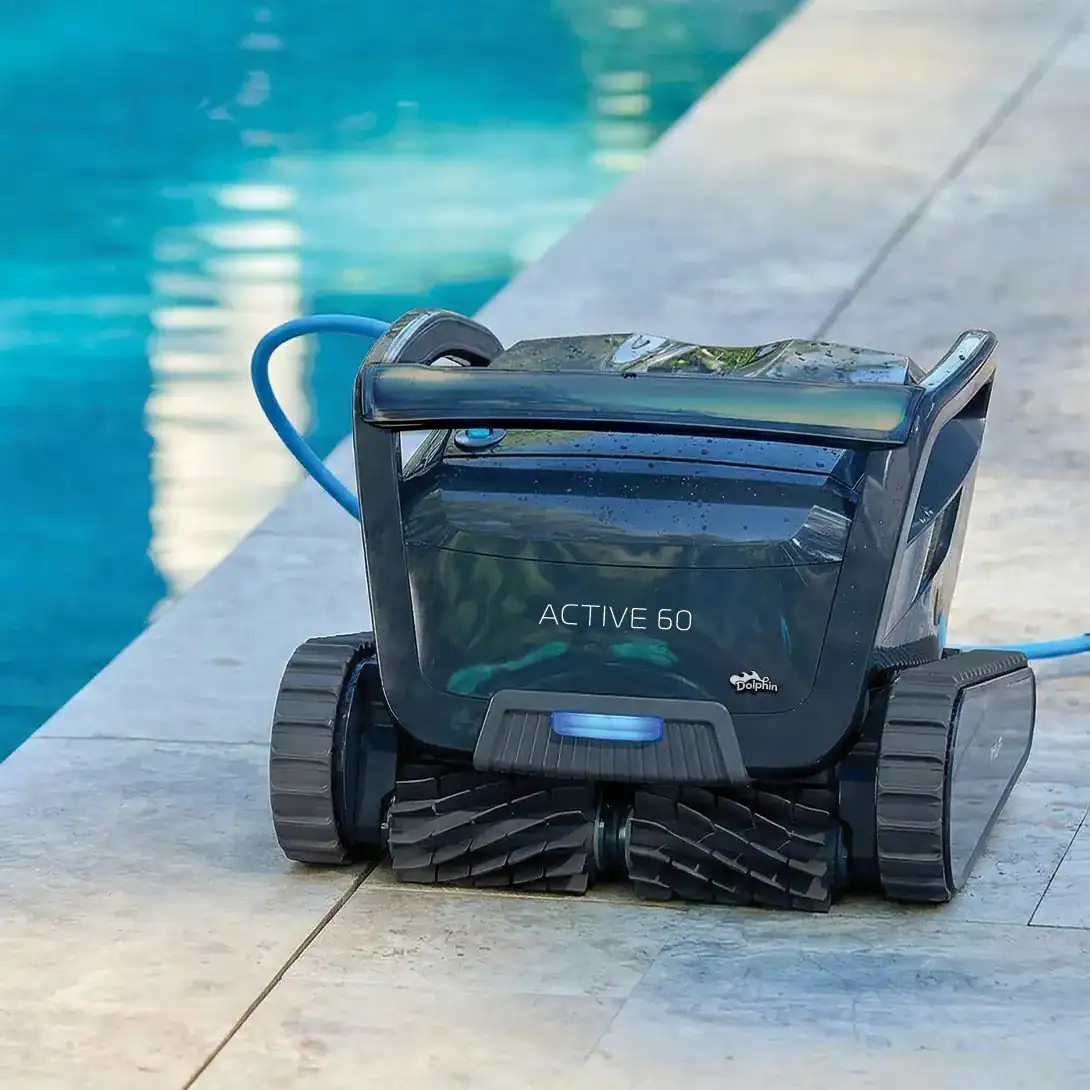
If you have ever spent a sunny Saturday hand-vacuuming your pool, you understand the appeal of a robotic cleaner. Drop it in, walk away, and come back to a spotless floor. After helping Greater Cincinnati pool owners pick cleaners for decades, here is our straight-talk guide to choosing the right one without overpaying for features you will never use. Between spring pollen, summer storm fallout, and the leaves that find every pool by September, a good robotic cleaner earns its keep around here.
How robotic pool cleaners actually work (vs. suction and pressure cleaners)
A robotic cleaner is a self-contained unit with its own motor, drive system, and onboard filter. You plug it in (or charge it, for cordless models), drop it in the water, and it scrubs your pool floor, walls, and waterline on its own. It does not tie into your pool’s pump or filtration system at all. That independence is the whole reason robotics clean better and cost less to run than the older cleaner styles.
Here is how the three types compare:
- Robotic cleaners run on low-voltage electricity through a transformer or an internal battery. They have their own filter basket, so the dirt they pick up never touches your pool filter. Smart models map the pool and brush as they go, so they actually scrub rather than just collect.
- Suction-side cleaners hook into your skimmer or a dedicated suction line and rely on your pump to move them around. They send all that debris straight into your skimmer basket and filter, which means more backwashing and more wear on your equipment.
- Pressure-side cleaners run off the return line, often needing a separate booster pump. They trap debris in their own bag but add to your energy bill because the pump has to run for them to work.
For most homeowners, the math favors robotics: better scrubbing, less strain on your filter and pump, and lower running costs because the unit sips electricity instead of leaning on a big pump motor.
Why they save you time and energy
A robotic cleaner does the two jobs you least want to do yourself: brushing and vacuuming. Because it runs on its own low-voltage motor, a typical cycle costs only pennies in electricity, far less than running your main pump and a booster to power a pressure cleaner. You are not adding hours of pump runtime just to clean.
The bigger payoff is your weekend. Set the cycle, drop the unit in, and the pool is swim-ready while you do something else. In Cincinnati that matters more than people expect. After a thunderstorm rolls through and dumps twigs and helicopter seeds into the water, or when the cottonwood and oak pollen coats everything in spring, the robot handles the cleanup you would otherwise be doing by hand in the heat.
Matching the cleaner to your pool
The single biggest mistake we see is buying on price or brand name instead of matching the cleaner to the actual pool. Walk through these before you decide:
- Pool size: Bigger pools need a unit with a stronger motor and a longer cycle so it can reach every corner. An undersized cleaner on a large pool just leaves spots.
- Surface type: Vinyl liners, fiberglass, and plaster or pebble surfaces each grip differently. Brush style and tracks vs. wheels affect how well a unit climbs and scrubs your particular surface.
- Shape and features: Tanning ledges, attached spas, zero-entry steps, and odd angles can trip up a basic floor-only model. Smart-navigation units handle complex shapes far better.
- Debris type: Fine sand and pollen call for a fine filter cartridge, while leaves, acorns, and storm debris need a large-capacity basket so the unit does not clog mid-cycle.
- Steps, walls, and waterline: If you want the waterline scrubbed where the oily scum line forms, you need a model rated for walls and waterline, not just the floor.
Tell us your pool size, surface, and what tends to fall in, and we will point you to the right fit. We carry and service the full lineup of robotic pool cleaners in Cincinnati, so you can compare them in person instead of guessing online.
The features that actually matter
Robotic cleaners come loaded with extras, and not all of them are worth paying for. These are the ones that make a real difference day to day:
- Cleaning coverage: Floor-only is the cheapest, but floor plus walls plus waterline is what most owners actually want. This is the feature to spend on.
- Smart navigation: Gyroscope-guided mapping cleans in efficient lines instead of bouncing randomly, so it covers the whole pool in less time and misses fewer spots.
- App control and scheduling: App-controlled models let you start a cycle, pick a cleaning mode, or send the unit to a specific area from your phone, and set it to run on a schedule.
- Filter basket size and access: Top-load baskets that lift straight out are far less messy than older bag systems. A bigger basket means fewer mid-cycle stops during leaf season.
- Tangle-free cords or cordless: Corded units use a swivel to resist tangling and often run longer for big pools. Cordless models skip the cable entirely and drop in anywhere, which most residential owners love.
- Wall climbing: Strong climbing and good surface grip keep the unit from sliding back down before it finishes the waterline.
Brands we carry: Maytronics Dolphin and Beatbot
We stock and service two lines we trust to hold up in real backyards:
- Maytronics Dolphin: The workhorse of the category. Dolphin offers everything from light cordless models for smaller and above-ground pools up to the M-series and Active line for larger pools and heavier debris. Parts and service support are excellent, which matters when you want a cleaner to last several seasons.
- Beatbot: A newer name pushing the tech forward with multi-mode cleaning, advanced navigation, and surface-skimming features on select models. A strong option if you want the latest smart-navigation and app features.
Because models and configurations change each season, the best move is to compare them side by side. Browse the current Dolphin and Beatbot robotic cleaner lineup or stop into the showroom and we will walk you through the differences.
Maintaining the cleaner itself
A robotic cleaner is a piece of equipment, and a little care keeps it running for years:
- Rinse the filter basket or cartridge with a hose after every cycle so debris does not dry and clog the mesh.
- Deep-clean the filters periodically and check the brushes for wear, replacing them when they flatten out.
- Pull hair, string, and fishing line out of the wheels, tracks, and impeller so the drive stays free.
- Store the unit out of direct sun on a caddy. UV and heat are hard on cords, seals, and electronics.
- Never leave it sitting in the pool between uses. Constant chemical exposure shortens its life.
- Remove the cleaner and store it properly before winter when you close the pool for the season.
A quick how-to-choose checklist
- Measure your pool and note the surface (vinyl, fiberglass, plaster, or pebble).
- Decide whether you need floor-only or floor, walls, and waterline coverage.
- Match debris type to filter style: fine cartridge for pollen, large basket for leaves.
- Pick cordless for easy handling or corded for the longest run time on a big pool.
- Decide which smart features you will actually use: app control, scheduling, navigation modes.
- Confirm the basket is easy to access and clean.
- Ask about warranty, local service, and current manufacturer rebates before you buy.
Frequently Asked Questions
For most pool owners, yes. They scrub the floor, walls, and waterline far better than manual vacuuming, run independently of your pool’s pump, and cost only pennies per cycle in electricity. The hours they save every week, especially during Cincinnati’s pollen and storm seasons, make them a smart long-term buy.
With proper care, a quality robotic cleaner typically lasts several seasons. Rinsing the filter after each use, clearing debris from the wheels and impeller, and storing the unit out of the sun on a caddy all extend its life considerably. Buying a brand with strong local parts and service support helps too.
Cordless models are easier to handle with no cable to untangle and suit most residential pools. Corded units can offer longer continuous run times, which helps on larger pools. If your pool is average sized and you value convenience, cordless is usually the better pick. We can help you weigh both for your setup.
Many can, but not all. Floor-only models stay on the bottom, while mid-range and premium units are rated to climb walls and scrub the waterline where the oily scum line forms. If a clean waterline matters to you, confirm the model is rated for it before buying, since it is the feature most worth the upgrade.
It depends on your pool’s size, surface, and debris load. Maytronics Dolphin offers a proven model for nearly every pool, from light cordless units to heavy-duty M-series cleaners. Beatbot is a strong choice if you want the newest navigation and app features. Tell us about your pool and we will match you.